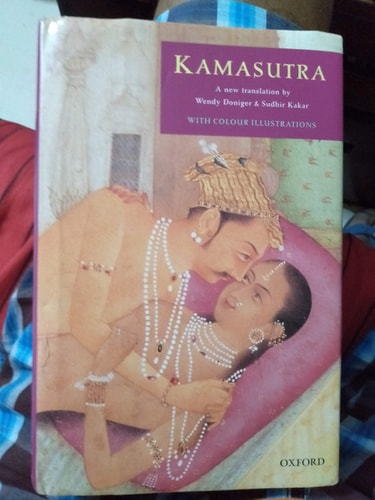
Kamasutra
0
0
As an Amazon Associate and affiliate partner, Menrva Books earns from qualifying purchases. Learn more
Author Description
The Kamasutra is the oldest extant textbook of erotic love. But it is more than a book about sex. It is about the art of living--about finding a partner, maintaining power in a marriage, committing adultery, living as or with a courtesan, using drugs--and also, of course, about the many and varied positions available to lovers in sexual intercourse and the pleasures to be derived from each.The Kamasutra was composed in Sanskrit, the literary language of ancient India, sometime in the third century, probably in North India. It combines an encyclopedic coverage of all imaginable aspects of sex with a closely observed sexual psychology and a dramatic, novelistic narrative of seduction, consummation, and disentanglement. Best known in English through the highly mannered, padded, and inaccurate nineteenth-century translation by Sir Richard Burton, the text is newly translated here into clear, vivid, sexually frank English. This edition also includes a section of vivid Indian color illustrations along with three uniquely important commentaries: translated excerpts from the earliest and most famous Sanskrit commentary (thirteenth century) and from a twentieth-century Hindi commentary, and explanatory notes by the two translators.The lively and entertaining introduction by translator Wendy Doniger, one of the world's foremost Sanskrit scholars, discusses the history of The Kamasutra and its reception in India and Europe, analyses its attitudes toward gender and sexual violence, and sets it in the context of ancient Indian social theory, scientific method, and sexual ethics.
Menrva's Summary
THE THESIS
The Kamasutra serves as an ancient, comprehensive manual on the art of living, aiming to codify the social, psychological, and physical dimensions of human desire and domestic conduct. Authored by Mallanaga Vatsyayana in third-century India, the text functions as a systematic treatise on the pursuit of pleasure within the framework of Indian social theory. By integrating sexual psychology with practical advice on courtship, marriage, and social navigation, Vatsyayana provides a structured guide for the urban citizen of his era.
THE SCOPE MAP
What You Will Find
- Detailed taxonomies of sexual positions and techniques.
- Social guidance on courtship, marriage, and the role of the courtesan.
- Historical context regarding ancient Indian sexual ethics and social hierarchy.
- Scholarly commentary and analysis of the text's reception across centuries.
Scope Limits
- The text does not provide a modern clinical or medical perspective on human biology.
- It does not represent a universal guide to contemporary relationship dynamics.
THE AUTHORITY PERSPECTIVE
Scholars and historians regard this work as a foundational document for understanding the social and sexual mores of ancient India. Readers frequently note that the text offers significant insight into historical gender roles and the philosophical underpinnings of pleasure in classical Sanskrit literature.
Page Count:
304
Publication Date:
2002-06-06
Publisher:
Oxford University Press
ISBN-10:
0192802704
ISBN-13:
9780192802705
Philosophy
History
Non-Fiction
Ancient Indian Literature
Sociology
Community Tags
Other Editions(10)



Similar Books












Reader Comments
Share Your Thoughts
No comments yet. Be the first to share your thoughts!