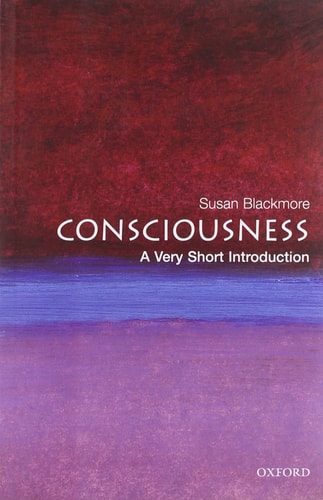
Consciousness: A Very Short Introduction
0
0
As an Amazon Associate and affiliate partner, Menrva Books earns from qualifying purchases. Learn more
Author Description
"The last great mystery for science," consciousness has become a controversial topic. Consciousness: A Very Short Introduction challenges readers to reconsider key concepts such as personality, free will, and the soul. How can a physical brain create our experience of the world? What creates our identity? Do we really have free will? Could consciousness itself be an illusion? Exciting new developments in brain science are opening up these debates, and the field has now expanded to include biologists, neuroscientists, psychologists, and philosophers. This book clarifies the potentially confusing arguments and clearly describes the major theories, with illustrations and lively cartoons to help explain the experiments. Topics include vision and attention, theories of self, experiments on action and awareness, altered states of consciousness, and the effects of brain damage and drugs. This lively, engaging, and authoritative book provides a clear overview of the subject that combines the perspectives of philosophy, psychology, and neuroscience--and serves as a much-needed launch pad for further exploration of this complicated and unsolved issue.About the Series: Combining authority with wit, accessibility, and style, Very Short Introductions offer an introduction to some of life's most interesting topics. Written by experts for the newcomer, they demonstrate the finest contemporary thinking about the central problems and issues in hundreds of key topics, from philosophy to Freud, quantum theory to Islam.
Menrva's Summary
THE THESIS
How can a physical brain generate the subjective experience of the world, and is consciousness itself a fundamental reality or an illusion? Susan Blackmore, a psychologist and writer with extensive research experience in consciousness and parapsychology, synthesizes findings from biology, neuroscience, and philosophy to examine the nature of the self. She presents a framework that questions traditional assumptions about free will and the soul, utilizing current scientific debates to challenge the reader's perception of their own identity.
THE SCOPE MAP
What You Will Find
- Analysis of vision, attention, and the mechanisms of awareness
- Overview of major philosophical and scientific theories of self
- Examination of altered states of consciousness and the impact of brain damage or chemical substances
- Visual aids including illustrations and cartoons to clarify experimental concepts
Scope Limits
- Does not provide a singular, definitive solution to the 'hard problem' of consciousness
- Avoids overly dense academic jargon in favor of an introductory overview
THE AUTHORITY PERSPECTIVE
Readers frequently note the accessibility of the prose, which manages to distill complex interdisciplinary debates into a manageable format for newcomers. Experts highlight this as a foundational text that effectively bridges the gap between philosophical inquiry and empirical neuroscience.
Page Count:
146
Publication Date:
2005-06-23
Publisher:
Oxford University Press
ISBN-10:
0192805851
ISBN-13:
9780192805850
Non-Fiction
Psychology
Philosophy
Neuroscience
Consciousness
Community Tags
Other Editions(4)

Similar Books
Reader Comments
Share Your Thoughts
No comments yet. Be the first to share your thoughts!