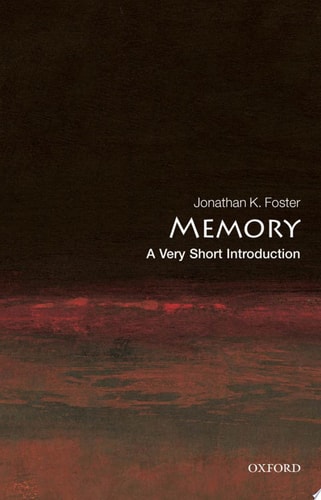
Memory: A Very Short Introduction
0
0
As an Amazon Associate and affiliate partner, Menrva Books earns from qualifying purchases. Learn more
Author Description
Memories are an integral part of being human. They haunt us, we cherish them, and in our lives we collect more of them with each new experience. Without memory, you would not be able to maintain a relationship, drive your car, talk to your children, read a poem, watch television, or do much of anything at all. Memory: A Very Short Introduction explores the fascinating intricacies of human memory. Is it one thing or many? Why does it seem to work well sometimes and not others? What happens when it "goes wrong"? Can it be improved or manipulated through techniques such as mnemonic rhymes or "brain implants"? How does memory change as we age? And what about so-called recovered memories--can they be relied upon as a record of what actually happened in our personal past? This book brings together our most recent knowledge to address (in a scientifically rigorous but highly accessible way) these and many other important questions about how memory works, and why we can't live without it.About the Series: Combining authority with wit, accessibility, and style, Very Short Introductions offer an introduction to some of life's most interesting topics. Written by experts for the newcomer, they demonstrate the finest contemporary thinking about the central problems and issues in hundreds of key topics, from philosophy to Freud, quantum theory to Islam.
Menrva's Summary
THE THESIS
This book investigates the fundamental mechanisms of human memory, questioning how it functions, why it fails, and the extent to which it can be manipulated or recovered. Elizabeth F. Loftus, a leading expert in the field of memory research, utilizes decades of psychological data and experimental findings to explain the architecture of human recollection. She presents a framework that challenges the notion of memory as a static recording, instead framing it as a reconstructive process susceptible to external influence and internal error.
THE SCOPE MAP
What You Will Find
- Analysis of memory types, including short-term, long-term, and working memory.
- Examination of memory failure, including forgetting and false memory syndrome.
- Discussion of mnemonic techniques and potential technological interventions like brain implants.
- Exploration of memory changes across the human lifespan.
Scope Limits
- The text does not provide a comprehensive clinical manual for treating memory disorders.
- It does not offer an exhaustive history of neurobiology beyond the scope of cognitive psychology.
THE AUTHORITY PERSPECTIVE
Experts recognize this work as a concise, authoritative primer that effectively distills complex cognitive research for a general audience. Readers frequently note the clarity of the prose, which balances scientific rigor with an accessible tone suitable for students and interested laypeople alike.
Page Count:
142
Publication Date:
2008-01-01
Publisher:
ADDISON-WESLEY @
ISBN-10:
0192806750
ISBN-13:
9780192806758
Science
Non-Fiction
Psychology
Neuroscience
Memory
Community Tags
Similar Books