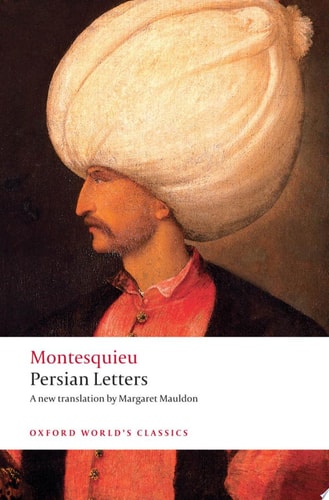
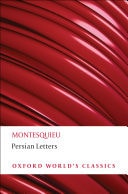
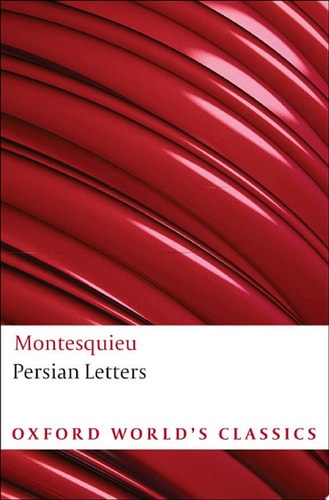
Persian Letters
0
0
As an Amazon Associate and affiliate partner, Menrva Books earns from qualifying purchases. Learn more
Author Description
Persian Letters is a classic of European literature by Baron de Montesquieu, the brilliant thinker who had a huge influence on the Enlightenment. Through the astute observations of his two fictional Persian travelers in Europe--Usbek and Rica--Montesquieu asks fundamental questions about human nature, the manners and flirtations of polite society, the structures of power, and the hypocrisy of religion-all in a witty, inventive satire that combines travel literature and the epistolary genre. Indeed, this pioneering epistolary novel appeared almost twenty years before Richardson's Pamela. This is the first English translation based on the new, definitive edition of the original French text, revealing this lively work as Montesquieu first intended. The book features an engaging and comprehensive introductory essay, covering a wide range of topics, including the novel's fictional techniques and innovations; travel literature as a genre; historical context and Enlightenment ideas; Orientalism; and other issues. The editor has included full explanatory notes, a useful list of characters, and an invaluable appendix featuring excerpts from Montesquieu's most important sources.About the Series: For over 100 years Oxford World's Classics has made available the broadest spectrum of literature from around the globe. Each affordable volume reflects Oxford's commitment to scholarship, providing the most accurate text plus a wealth of other valuable features, including expert introductions by leading authorities, voluminous notes to clarify the text, up-to-date bibliographies for further study, and much more.
Menrva's Summary
THE PULSE
Two Persian travelers, Usbek and Rica, navigate the social and political landscape of 18th-century France, using their outsider status to critique the contradictions of European civilization. The protagonists maintain a correspondence with friends and family back home, documenting their observations on everything from the French court and religious institutions to the nature of power and human desire. Their objective is to understand the strange customs of the West while grappling with the personal consequences of their long absence from their own homes. The narrative framework is strictly epistolary, relying on the exchange of letters to build a multi-layered perspective on both the observers and the observed.
INSIDE THE PAGES
- Epistolary narrative structure consisting of letters between various correspondents
- Satirical commentary on contemporary French social and political institutions
- Philosophical inquiry into the nature of justice, liberty, and despotism
- Use of the 'outsider' perspective to highlight cultural relativism
- Exploration of the harem as a metaphor for domestic and political tyranny
- Witty and ironic tone used to dismantle societal hypocrisy
- Integration of travelogue elements with intellectual discourse
- Character-driven reflections on the human condition and moral behavior
THE COLLECTIVE ECHO
Readers and critics frequently highlight the work as a foundational text of the Enlightenment that successfully balances intellectual rigor with sharp, accessible wit. Discussion often centers on the effectiveness of the epistolary format in allowing Montesquieu to critique his own society without direct confrontation. Many observers note that the contrast between the Persian travelers' observations and the reality of their own lives creates a complex, layered reading experience. The text remains a subject of study for its early exploration of cultural relativism and its influence on the development of the modern novel. Readers appreciate how the author uses humor and irony to address serious questions about power and human nature.
Page Count:
320
Publication Date:
2008-05-11
Publisher:
Oxford University Press
ISBN-10:
0192806351
ISBN-13:
9780192806352
Philosophy
Satire
Epistolary
Classic Literature
Political fiction
Criticism history
Enlightenment
Community Tags
Other Editions(5)
Similar Books

Reader Comments
Share Your Thoughts
No comments yet. Be the first to share your thoughts!