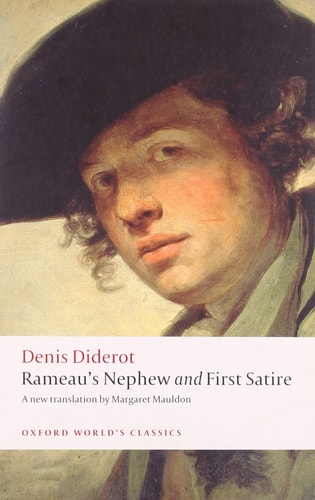
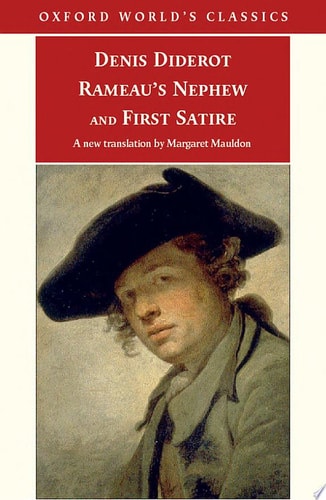
Rameau's Nephew and First Satire
0
0
As an Amazon Associate and affiliate partner, Menrva Books earns from qualifying purchases. Learn more
Author Description
In Diderot's Brilliant And Witty Dialogue Two Acquaintances Discuss Art, Music, Education And Society. A Key Work Of The French Enlightenment, In This Sparkling New Translation It Is Paired With Diderot's First Satire, Providing Context For Rameau's Nephew, The 'second Satire'. -;'unless You Know Everything, You Really Know Nothing' Diderot's Brilliant And Witty Dialogue Begins With A Chance Encounter In A Paris Café Between Two Acquaintances. Their Talk Ranges Broadly Across Art, Music, Education, And The Contemporary Scene, As The Nephew Of Composer Rameau, Amoral And Bohemian, Alternately Shocks And Amuses The Moral, Bourgeois Figure Of His Interlocutor. Exuberant And Highly Entertaining, The Dialogue Exposes The Corruption Of Society In Diderot's Characteristic Philosophical Exploration. The Debates Of The French Enlightenment Speak To Us Vividly In This Sparkling New Translation, Which Also Includes The First Satire, A Related Work That Provides The Context For Rameau's Nephew, Diderot's 'second Satire'. -
Menrva's Summary
THE PULSE
A chance encounter in a Parisian café between two acquaintances sparks a wide-ranging, provocative dialogue that challenges the social and moral norms of the Enlightenment era. The protagonist, an amoral and bohemian nephew of the composer Rameau, engages in a spirited debate with a more conventional, bourgeois interlocutor. Their conversation serves as a vehicle for Diderot to dissect the hypocrisy of contemporary society, the nature of artistic integrity, and the complexities of human behavior. The narrative is structured as a philosophical dialogue, utilizing the friction between these two opposing archetypes to explore the tension between individual desire and social expectation.
INSIDE THE PAGES
- Philosophical dialogue format
- Satirical critique of 18th-century French society
- Exploration of moral relativism versus bourgeois values
- Commentary on the role of art and music in culture
- Character-driven narrative focused on intellectual debate
- Use of an unreliable or provocative narrator
- Contextual pairing with the First Satire
- Examination of the corruption inherent in social hierarchies
THE COLLECTIVE ECHO
Readers and critics frequently highlight the work's enduring wit and the sharp, intellectual energy of the central debate. Discussion often centers on the ambiguity of the characters, as the nephew's bohemian lifestyle serves as both a critique of and a mirror to the society he mocks. Scholars appreciate the text for its role as a foundational piece of Enlightenment thought, noting how Diderot balances philosophical inquiry with theatrical flair. Many readers find the interplay between the two speakers to be remarkably modern in its skepticism and psychological depth. The work remains a frequent subject of study for those interested in the evolution of the novel and the history of European philosophy.
Page Count:
176
Publication Date:
2006-01-01
Publisher:
Oxford University Press, Uk
ISBN-10:
0191517321
ISBN-13:
9780191517327
Philosophy
Satire
French literature
Classic Literature
Dialogue
Enlightenment
Community Tags
Other Editions(3)
Similar Books