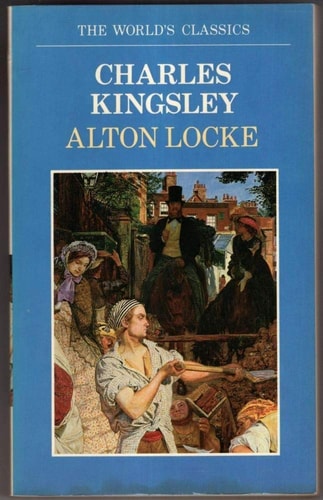
Alton Locke
0
0
As an Amazon Associate and affiliate partner, Menrva Books earns from qualifying purchases. Learn more
Author Description
Alton Locke becomes deeply involved in the fierce struggle to improve the harsh conditions of life of the English working class
Menrva's Summary
THE PULSE
Alton Locke, a tailor and aspiring poet, finds his personal ambitions colliding with the brutal realities of the Chartist movement in mid-19th century London. Driven by a desire for social justice and intellectual recognition, Locke navigates the squalor of the London slums while attempting to reconcile his radical political convictions with his Christian faith. He faces opposition from both the rigid class structures of Victorian society and the internal conflicts of the labor movement. The narrative is presented as a first-person account, documenting his transformation from a naive apprentice into a disillusioned activist. The world is defined by the stark physical constraints of poverty and the logical constraints of a society undergoing rapid industrial change.
INSIDE THE PAGES
- First-person confessional narrative structure
- Detailed depictions of Victorian sweatshops and urban poverty
- Exploration of the Chartist political movement
- Integration of Christian socialist philosophy
- Focus on the tension between individual ambition and collective struggle
- Use of dialect to distinguish social classes
- Philosophical debates regarding labor reform
- Character arcs centered on moral and political awakening
THE COLLECTIVE ECHO
Readers and critics often analyze this work as a significant document of Victorian social consciousness. Discussion frequently centers on the balance between Kingsley's didactic intent and the development of Locke as a complex, flawed protagonist. Many highlight the effectiveness of the atmospheric descriptions of London's working-class districts in establishing the gravity of the political conflict. The text is noted for its earnest tone and its role in shaping the discourse around labor rights during the nineteenth century. Scholars often examine how the narrative reflects the specific ideological anxieties of the era regarding class mobility and religious duty.
Page Count:
480
Publication Date:
1984-02-09
Publisher:
Oxford University Press
ISBN-10:
0192816330
ISBN-13:
9780192816337
Political fiction
Historical
Classic Literature
Social Realism
Victorian
Poets biography
Community Tags
Other Editions(3)

Similar Books