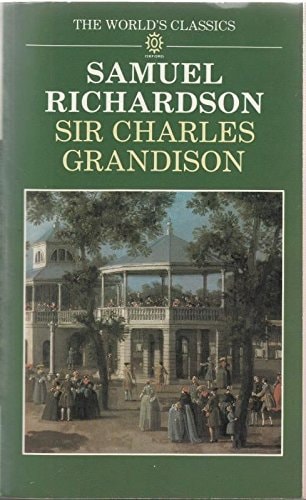
Sir Charles Grandison
0
0
As an Amazon Associate and affiliate partner, Menrva Books earns from qualifying purchases. Learn more
Author Description
First published in 1753, Richardson's third novel was immensely popular. Richardson draws on every kind of narrative technique in this intricate and logically patterned novel. He creates a work that is at once a novel of manners, a novel of sensibility, a Gothic novel--a variety of genres that highlight his gift for witty character sketch and brisk dialogue.
Menrva's Summary
THE PULSE
The narrative centers on the moral and social dilemmas faced by Sir Charles Grandison as he navigates the expectations of the English aristocracy and his own personal integrity. Grandison, a paragon of virtue, finds himself caught between the demands of his family, the expectations of society, and his own romantic interests. The novel utilizes an epistolary framework, relying on letters exchanged between characters to reveal their internal motivations and the external pressures placed upon them. Richardson constructs a world governed by strict social codes where the protagonist must balance his desire for autonomy with the rigid requirements of his station.
INSIDE THE PAGES
- Extensive use of the epistolary format to provide multiple perspectives
- Detailed character sketches focusing on moral development
- Integration of social commentary regarding 18th-century manners
- Brisk, witty dialogue that contrasts with lengthy introspective letters
- Exploration of the novel of sensibility genre conventions
- Incorporation of Gothic elements to heighten narrative tension
- Logical and intricate plotting that emphasizes character consistency
- Focus on the idealization of the male protagonist as a moral exemplar
THE COLLECTIVE ECHO
Discussion often centers on Richardson's ability to maintain narrative momentum through the letter-writing format. Readers frequently highlight the contrast between the protagonist's idealized virtue and the complex, often flawed characters surrounding him. Critics note that the work serves as a significant example of the transition between different literary styles in the mid-18th century. The pacing is often described as deliberate, reflecting the slow-moving social interactions of the period. Many readers appreciate the depth of characterization, even while acknowledging the dense prose style typical of the era.
Page Count:
1647
Publication Date:
1986-12-04
Publisher:
Oxford University Press
ISBN-10:
0192817450
ISBN-13:
9780192817457
Fiction
Classic Literature
Epistolary
Novel of Manners
18th century
England