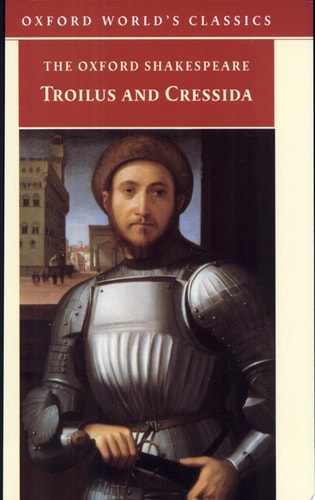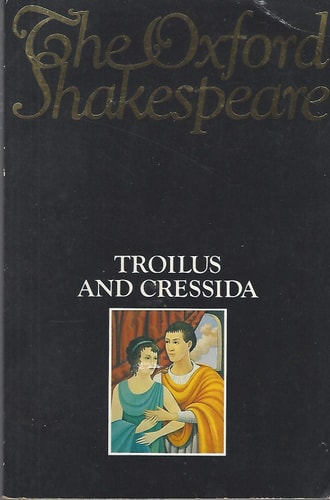
Troilus and Cressida
0
0
As an Amazon Associate and affiliate partner, Menrva Books earns from qualifying purchases. Learn more
Author Description
Given the wealth of formal debate contained in this tragedy, Troilus and Cressida was probably written in 1602 for a performance at one of the Inns of the Court. Shakespeare's treatment of the age-old tale of love and betrayal is based on many sources, from Homer and Ovid to Chaucer and Shakespeare's near contemporary Robert Greene. In the introduction the various problems connected with the play, its performance, and publication, are considered succinctly; its multiple sources are discussed in detail, together with its peculiar stage history and its renewed popularity in recent years.
Menrva's Summary
THE PULSE
During the prolonged siege of Troy, the young prince Troilus seeks the affection of Cressida while the Greek and Trojan armies engage in a stalemate of philosophical and physical conflict. Troilus navigates the complexities of courtly love and the disillusionment of war, while Cressida faces the precarious reality of being a woman caught between warring factions. The narrative framework utilizes a blend of high-flown rhetoric and cynical realism to examine the breakdown of traditional heroic ideals. Characters are constrained by the rigid expectations of honor, duty, and the inevitable decay of their societal structures as the conflict drags toward an inconclusive end.
INSIDE THE PAGES
- Use of formal debate and philosophical discourse
- Satirical portrayal of legendary heroic figures
- Exploration of the intersection between private desire and public duty
- Non-linear progression of military and romantic subplots
- Integration of classical source material from Homer and Ovid
- Shift between elevated verse and coarse, cynical prose
- Examination of betrayal and the instability of human values
- Focus on the futility of war and the corruption of ideals
THE COLLECTIVE ECHO
Discussion often centers on the play's refusal to fit neatly into the categories of comedy or tragedy, leading many to label it a problem play. Readers frequently highlight the stark contrast between the romantic aspirations of the protagonists and the cynical, often grotesque, depictions of the warriors on both sides. Critics often examine how the text deconstructs the mythic status of figures like Achilles and Ajax to reveal human pettiness and moral ambiguity. The work is noted for its linguistic density and its challenging, often uncomfortable, perspective on the nature of honor and loyalty. Many find the play's lack of a traditional resolution to be a deliberate stylistic choice that mirrors the chaotic and senseless nature of the conflict it depicts.
Page Count:
224
Publication Date:
1984-05-17
Publisher:
Oxford University Press
ISBN-10:
0192814397
ISBN-13:
9780192814395
Drama
Dramatic works
Tragedy
Renaissance
Play
Classical