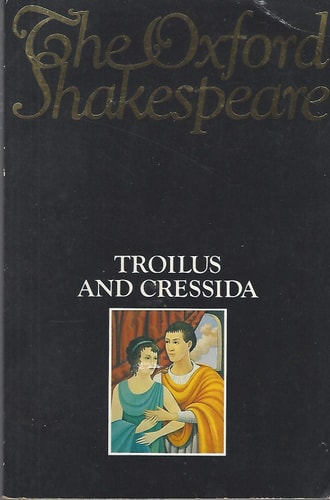
Troilus and Cressida
0
0
As an Amazon Associate and affiliate partner, Menrva Books earns from qualifying purchases. Learn more
Author Description
Given the wealth of formal debate contained in this tragedy, Troilus and Cressida was probably written in 1602 for a performance at one of the Inns of the Court. Shakespeare's treatment of the age-old tale of love and betrayal is based on many sources, from Homer and Ovid to Chaucer and Shakespeare's near contemporary Robert Greene. In the introduction the various problems connected with the play, its performance, and publication, are considered succinctly; its multiple sources are discussed in detail, together with its peculiar stage history and its renewed popularity in recent years.
Menrva's Summary
THE PULSE
During the protracted Trojan War, the young prince Troilus seeks the affection of Cressida while the Greek and Trojan armies engage in a cycle of political maneuvering and military stalemate. The protagonist attempts to navigate the volatile intersection of romantic desire and the brutal realities of a war that renders individual loyalty fragile. Opposing him are the cynical observations of Thersites, the strategic machinations of Ulysses, and the shifting allegiances of the warring factions. The narrative framework utilizes a blend of high-flown rhetoric and biting satire to examine the breakdown of traditional heroic ideals within a claustrophobic, cynical environment.
INSIDE THE PAGES
- Use of extended philosophical debates regarding value and honor
- Satirical characterization of legendary Homeric figures
- Exploration of the dichotomy between private desire and public duty
- Frequent shifts in tone from romantic idealism to bitter cynicism
- Complex, non-linear moral landscape where heroes are often portrayed as flawed
- Integration of classical source material from Homer, Ovid, and Chaucer
- Focus on the futility of conflict and the corruption of ideals
- Epistolary and oratorical elements embedded within the dialogue
THE COLLECTIVE ECHO
Discussion often centers on the play's classification as a problem play due to its refusal to adhere to traditional generic boundaries. Readers frequently highlight the stark contrast between the romantic subplot and the bleak, disillusioned portrayal of the Trojan War. Critics often analyze the linguistic density of the speeches, noting how the characters use complex rhetoric to justify their shifting moral positions. The work is frequently cited for its modern-feeling cynicism, which challenges the heroic tropes established in earlier classical literature. Many readers find the play's lack of a clear resolution to be its most provocative feature, as it leaves the audience to grapple with the ambiguity of the characters' fates.
Page Count:
224
Publication Date:
1998-10-29
Publisher:
Oxford University Press
ISBN-10:
0192836110
ISBN-13:
9780192836113
Romance
Drama
Renaissance Theater
Tragedy
Classical
Dramatic works
War
Community Tags
Other Editions(3)

Similar Books