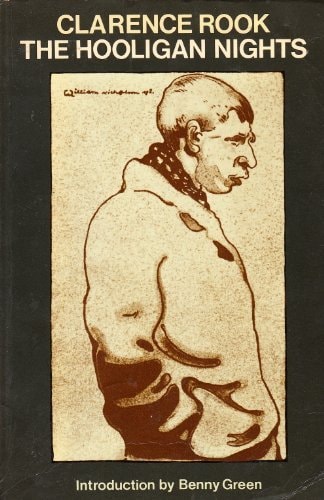
The Hooligan Nights: Being the Life and Opinions of a Young and Impertinent Criminal Recounted by Himself and Set Forth
0
0
As an Amazon Associate and affiliate partner, Menrva Books earns from qualifying purchases. Learn more
Author Description
Young Alf was a self styled hooligan and Clarence Rook made him the subject of this portrait of the lore and language of teenage gangland in London in the 1890s. Rook made excursions from his safe and respectable world to meet Young Alf at the Elephant and Castle, lambeth Walk, and elsewhere and he describes the seedy locations and incidents he witnesses in a witty & perceptive style.
Menrva's Summary
THE PULSE
A young London criminal navigates the precarious social landscape of the 1890s, offering a candid account of his life within the city's burgeoning gang culture. The protagonist, known as Young Alf, serves as both narrator and subject, detailing his daily survival and illicit activities to an inquisitive outsider. The narrative framework relies on the interaction between the respectable author and the street-hardened youth, contrasting the rigid class structures of Victorian London with the fluid, dangerous morality of the underworld. The story operates within the physical constraints of the city's slums, where poverty and social exclusion dictate the logical boundaries of Alf's existence.
INSIDE THE PAGES
- First-person narrative perspective from the criminal's viewpoint
- Detailed depiction of 1890s London street geography
- Exploration of Victorian-era slang and criminal vernacular
- Episodic structure documenting various petty crimes and social encounters
- Contrast between the author's observational tone and the protagonist's cynical voice
- Focus on the socio-economic conditions of the Elephant and Castle district
- Character study of a self-styled hooligan
- Examination of the moral ambiguity inherent in urban poverty
THE COLLECTIVE ECHO
Readers and critics often note the historical significance of this work as a primary source for understanding late 19th-century London street culture. Discussion frequently centers on the authenticity of the protagonist's voice and the author's ability to bridge the gap between respectable society and the criminal underworld. The pacing is described as observational and episodic, prioritizing character study over traditional plot-driven tension. Many highlight the witty and perceptive nature of the prose, which manages to capture the grit of the era without resorting to excessive melodrama. The book remains a point of interest for those examining the evolution of urban crime literature and the social history of the Victorian period.
Page Count:
179
Publication Date:
1979-01-01
Publisher:
Oxford University Press
ISBN-10:
0192812564
ISBN-13:
9780192812568
Politics
Historical Fiction
Crime
Urban
Victorian
London
Social Realism