The Luzhin Defense
0
0
As an Amazon Associate and affiliate partner, Menrva Books earns from qualifying purchases. Learn more
Author Description
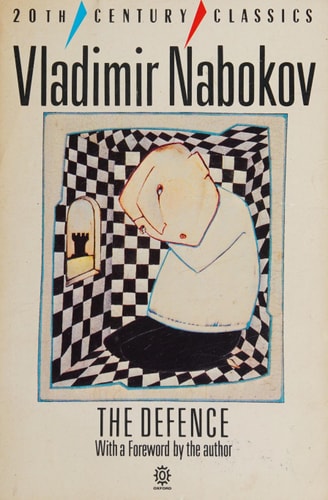
Nabokov’s third novel, The Luzhin Defense, is a chilling story of obsession and madness. As a young boy, Luzhin was unattractive, distracted, withdrawn, sullen — an enigma to his parents and an object of ridicule to his classmates. He takes up chess as a refuge from the anxiety of his everyday life. His talent is prodigious and he rises to the rank of grandmaster — but at a cost: in Luzhin’s obsessive mind, the game of chess gradually supplants reality. His own world falls apart during a crucial championship match, when the intricate defense he has devised withers under his opponent’s unexpected and unpredictable lines of assault.
Menrva's Summary
THE PULSE
A socially isolated chess prodigy finds his grip on reality slipping as the rigid logic of the game begins to consume his perception of the world. Luzhin, a withdrawn and awkward youth, discovers in chess a sanctuary from the pressures of his environment. His rapid ascent to grandmaster status masks a growing psychological fragmentation, as the patterns of the board begin to dictate his daily existence. The narrative follows his decline as he faces a high-stakes tournament, where an opponent's unpredictable strategy forces a catastrophic collision between his internal game-logic and the external world.
INSIDE THE PAGES
- Exploration of the psychological toll of obsessive genius
- Use of chess as a metaphor for existential entrapment
- Detailed depiction of early 20th-century European social environments
- Third-person limited perspective focusing on Luzhin's internal state
- Stylistic focus on sensory details and intellectual abstraction
- Examination of the boundary between artistic creation and madness
- Non-linear progression of the protagonist's mental deterioration
- Symbolic representation of the 'defense' as a failed mechanism for living
THE COLLECTIVE ECHO
Readers and critics frequently highlight the precision of the prose and the clinical detachment with which the author observes the protagonist's descent. Discussion often centers on the effectiveness of the chess metaphor in illustrating the dangers of total immersion in a singular pursuit. Many note that the narrative prioritizes psychological depth over traditional plot progression, creating an atmosphere of mounting tension. The work is widely regarded for its ability to render the abstract mechanics of a mind in crisis into a tangible, haunting experience for the reader.
Page Count:
200
Publication Date:
1986-01-01
Publisher:
Oxford Univ Pr
ISBN-10:
0192820281
ISBN-13:
9780192820280
Psychological
Mental Health
Classic Literature
Chess
Russian