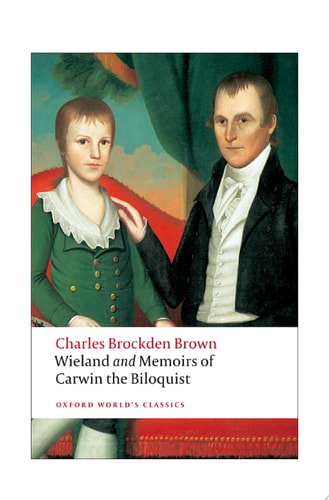
Wieland; or, the Transformation and Memoirs of Carwin, the Biloquist
0
0
As an Amazon Associate and affiliate partner, Menrva Books earns from qualifying purchases. Learn more
Author Description
One of the earliest major American novels, Wieland (1798) is a thrilling tale of suspense and intrigue set in rural Pennsylvania in the 1760s. Based on an actual case of a New York farmer who murdered his family, the novel employs Gothic devices and sensational elements such as spontaneous combustion, ventriloquism, and religious fanaticism. Also included is Memoirs of Carwin the Biloquist, the unfinished sequal to Wieland, in which Brown considers power and manipulation while tracing Carwin's career as a disciple of the utopist Ludloe.
Menrva's Summary
THE PULSE
The arrival of a mysterious stranger triggers a series of inexplicable events that drive a pious family toward madness and violent destruction. Clara Wieland, the narrator, attempts to reconstruct the collapse of her family's domestic tranquility following the appearance of Carwin, a man possessing the unsettling ability to project his voice. As her brother Theodore falls victim to religious delusions and auditory hallucinations, Clara must navigate a landscape of paranoia and isolation. The narrative framework utilizes an epistolary structure, presenting Clara's account as a series of letters that document the disintegration of reason under the influence of unseen forces.
INSIDE THE PAGES
- Epistolary narrative structure
- Exploration of religious fanaticism
- Use of ventriloquism as a catalyst for psychological terror
- Gothic atmosphere set in rural Pennsylvania
- Examination of the limits of human perception
- Unreliable narration
- Inclusion of the unfinished sequel, Memoirs of Carwin the Biloquist
- Focus on the tension between Enlightenment rationalism and irrational impulses
THE COLLECTIVE ECHO
Discussion often centers on the novel's status as a foundational text in American Gothic literature and its early exploration of the psychological thriller genre. Readers frequently highlight the effectiveness of the ventriloquism plot device in creating a sense of pervasive dread and uncertainty. Critics often analyze the contrast between the characters' rationalist beliefs and the inexplicable, violent events that defy logical explanation. The inclusion of the unfinished sequel is frequently noted for providing additional context regarding the themes of manipulation and power that permeate the primary narrative. Many readers find the prose style reflective of the late eighteenth-century literary tradition while noting its surprisingly modern focus on the fragility of the human mind.
Page Count:
336
Publication Date:
1994-06-23
Publisher:
Oxford University Press
ISBN-10:
0192828762
ISBN-13:
9780192828767
Horror
Psychological Thriller
Gothic
classic
Early American
Community Tags
Similar Books