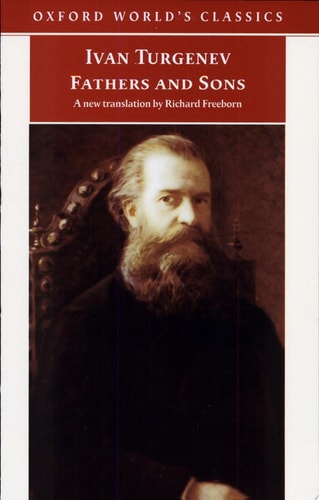
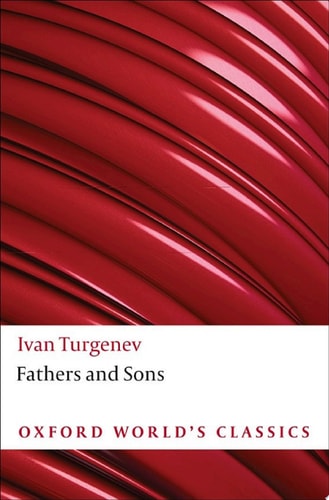
Fathers and Sons
0
0
As an Amazon Associate and affiliate partner, Menrva Books earns from qualifying purchases. Learn more
Author Description
When a young graduate returns home he is accompanied, much to his father and uncle's discomfort, by a strange friend "who doesn't acknowledge any authorities, who doesn't accept a single principle on faith." Turgenev's masterpiece of generational conflict shocked Russian society when it was published in 1862 and continues today to seem as fresh and outspoken as it did to those who first encountered its nihilistic hero.
Menrva's Summary
THE PULSE
The arrival of a radical young nihilist at a provincial estate triggers a profound ideological clash between the traditionalist older generation and the iconoclastic youth. Arkady Kirsanov returns home from university with his friend Bazarov, a man who rejects all established social, political, and religious authorities. This presence forces Arkady’s father and uncle to confront the obsolescence of their aristocratic values. The narrative unfolds through a third-person perspective that balances the internal psychological shifts of the characters with the external social tensions of 19th-century Russia.
INSIDE THE PAGES
- Exploration of the generational divide between liberal aristocrats and radical nihilists
- Detailed character study of the protagonist Bazarov
- Examination of the conflict between romantic idealism and scientific materialism
- Use of provincial estate settings to mirror broader national shifts
- Dialogue-heavy scenes that highlight clashing philosophical worldviews
- Subtle irony regarding the limitations of intellectual arrogance
- Integration of romantic subplots to test the characters' rigid ideologies
- Realistic depiction of rural Russian life and social hierarchies
THE COLLECTIVE ECHO
Readers frequently highlight the precision with which Turgenev captures the friction between the old guard and the emerging radical intelligentsia. Discussion often centers on the character of Bazarov, whose cold rejection of sentimentality serves as a focal point for debates regarding the efficacy of nihilism. Critics often note that the prose maintains a balanced, objective tone that avoids taking sides in the ideological disputes presented. The work is widely regarded for its ability to remain relevant, as the tension between established tradition and disruptive new ideas continues to resonate with contemporary audiences.
Page Count:
296
Publication Date:
1998-07-16
Publisher:
Oxford University Press
ISBN-10:
0192833928
ISBN-13:
9780192833921
Classic Literature
Social Commentary
Philosophical
Realism
Russian
Fathers and sons
Soviet Union
Community Tags
Other Editions(8)

Similar Books


Reader Comments
Share Your Thoughts
No comments yet. Be the first to share your thoughts!