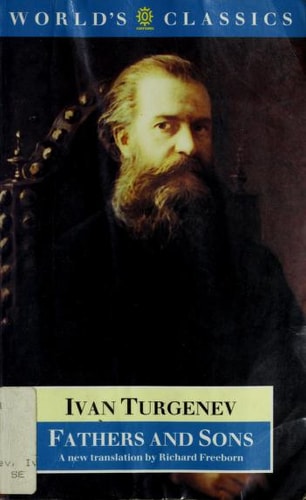
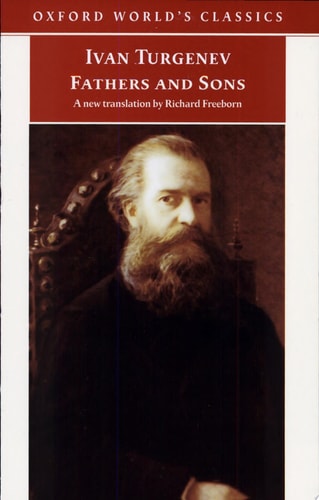
Fathers and Sons
0
0
As an Amazon Associate and affiliate partner, Menrva Books earns from qualifying purchases. Learn more
Author Description
When a young graduate returns home he is accompanied, much to his father and uncle's discomfort, by a strange friend "who doesn't acknowledge any authorities, who doesn't accept a single principle on faith." Turgenev's masterpiece of generational conflict shocked Russian society when it was published in 1862 and continues today to seem as fresh and outspoken as it did to those who first encountered its nihilistic hero.
Menrva's Summary
THE PULSE
The arrival of a radical young nihilist at his friend's family estate ignites a volatile clash between traditionalist values and the emerging intellectual defiance of the 1860s. Arkady Kirsanov returns from university with his mentor, Bazarov, whose rejection of established social, political, and religious authority creates immediate friction with Arkady's father and uncle. The narrative follows the resulting ideological standoff, which is complicated by the characters' attempts to navigate romantic entanglements and personal identity within a rigid social hierarchy. The story utilizes a third-person omniscient perspective to observe the shifting power dynamics between the older generation of landed gentry and the younger generation of scientific materialists.
INSIDE THE PAGES
- Exploration of the nihilist philosophy prevalent in 19th-century Russia
- Contrast between the romantic idealism of the older generation and the cold pragmatism of the youth
- Detailed depiction of the Russian provincial estate life
- Examination of the limitations of scientific rationalism when confronted with human emotion
- Use of dialogue as a primary vehicle for ideological debate
- Character-driven narrative focusing on the internal evolution of the protagonist
- Symbolism regarding the changing social landscape of post-emancipation Russia
- Pacing that mirrors the slow, deliberate rhythm of rural life punctuated by sharp intellectual confrontations
THE COLLECTIVE ECHO
Discussion often centers on the nuanced portrayal of Bazarov, who serves as both a symbol of intellectual liberation and a cautionary figure regarding the isolation of radicalism. Readers frequently highlight the balanced presentation of the generational divide, noting that Turgenev avoids caricaturing either the traditionalists or the nihilists. Critics often point to the prose's clarity and the author's ability to weave complex philosophical questions into the fabric of everyday domestic life. The work remains a focal point for those interested in the history of ideas and the social tensions that preceded the Russian Revolution. Many readers find the ending particularly effective in its quiet, somber reflection on the passage of time and the inevitable obsolescence of individual ideologies.
Page Count:
298
Publication Date:
1991-06-27
Publisher:
Oxford University Press
ISBN-10:
019282256X
ISBN-13:
9780192822567
Soviet Union
Fathers and sons
classic
Generational Conflict
Russian
Realism
Philosophical
Community Tags
Other Editions(8)

Similar Books




Reader Comments
Share Your Thoughts
No comments yet. Be the first to share your thoughts!