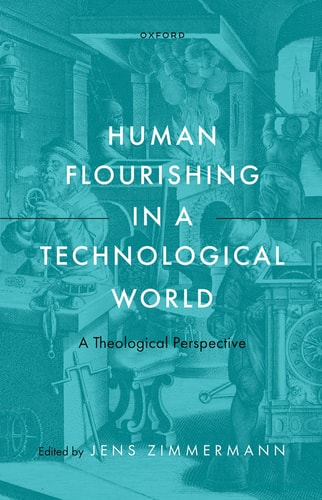
Human Flourishing in a Technological World: A Theological Perspective
0
0
As an Amazon Associate and affiliate partner, Menrva Books earns from qualifying purchases. Learn more
Author Description
Human Flourishing in a Technological World addresses the question of human identity and flourishing in the light of recent technological advances. The chapters in Part I provide a philosophical-theological evaluation of changing major anthropological assumptions that have guided human self-understanding from antiquity to modernity: How did we move from a religious and mostly embodied anthropology of the person to the idea that we can upload human consciousness to computing platforms? How did we come to imagine that machines can actually be intelligent, or even learn in human fashion? Moreover, what metaphysical changes explain our mostly uncritical embrace of a technological determination of being and thus of how reality "works"? In Part II, the focus turns to the practical implications of our changing understanding of what it means to be human. Covering some of the most pressing current concerns about human flourishing, these chapters deal with the impact of technology on education, healthcare, disability, leisure and the nature of work, communication, aging, death, and the nature of wisdom for human flourishing in light of evolutionary biology. The volume includes the text of a lecutre by virtual reality engineer and computer scientist Jaron Lanier, and a discussion between Lanier and other contributors.
Menrva's Summary
THE THESIS
This volume investigates how rapid technological advancement challenges traditional concepts of human identity and the requirements for genuine human flourishing. Edited by Jens Zimmermann, the work compiles interdisciplinary essays that examine the shift from embodied, religiously-informed anthropology to modern, technocentric self-conceptions. The contributors analyze the metaphysical assumptions underlying the digital age, questioning the validity of machine intelligence and the uncritical acceptance of technological determinism.
THE SCOPE MAP
What You Will Find
- Philosophical and theological critiques of transhumanism and consciousness uploading.
- Analysis of the historical transition from classical to modern anthropological frameworks.
- Practical applications regarding education, healthcare, disability, and the nature of work.
- A transcript of a lecture by Jaron Lanier and subsequent collaborative discussion.
Scope Limits
- The text does not provide technical manuals for specific software or hardware development.
- It does not offer a comprehensive history of computing, focusing instead on the metaphysical implications of technology.
THE AUTHORITY PERSPECTIVE
Scholars and readers frequently note the academic density of the prose, which requires a foundational understanding of both theology and philosophy. Experts highlight this as a significant contribution to the dialogue between humanities and computer science, particularly for those interested in the ethical dimensions of the digital era.
Page Count:
368
Publication Date:
2023-01-01
Publisher:
Oxford University Press
ISBN-10:
0192844016
ISBN-13:
9780192844019
Philosophy
Anthropology
Technology and Society
Theology
Ethics
Community Tags
Similar Books