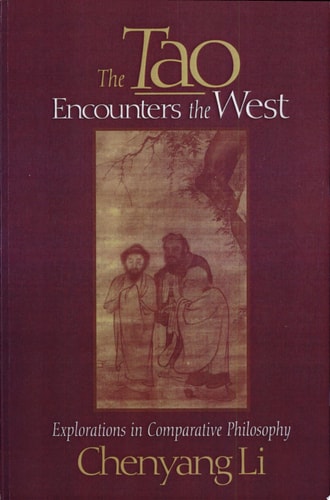
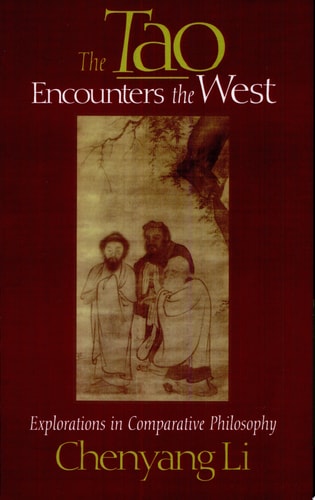
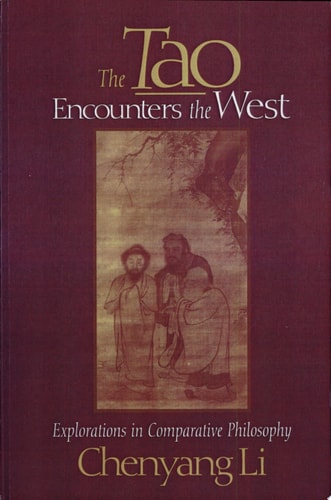
The Tao Encounters the West: Explorations in Comparative Philosophy
0
0
As an Amazon Associate and affiliate partner, Menrva Books earns from qualifying purchases. Learn more
Author Description
The relation between liberal democracy and Confucianism is explored by author Chenyang Li as he argues for a Chinese future where both coexist as independent value systems. This relationship is shown through a comparative study of Chinese and Western ideas and philosophies of being, truth, language, ethics, religion, and values. The book covers a wide range of philosophers and philosophies, including Aristotle, Zhuang Zi, Heidegger, Confucius, Kripke, and feminist care ethics. Li shows how a comparative approach to different patterns of thinking in Chinese and Western traditions sheds light on the intelligibility of Chinese multiple ethico-religious practice, which in turn supports the claim that democracy and Confucianism can coexist as independent value systems. In addition, Li's comparative study of different patterns of thinking in Chinese and Western traditions sheds light on the "harmony" model of Chinese philosophy and culture.
Menrva's Summary
THE THESIS
This book investigates the potential for coexistence between liberal democracy and Confucianism by examining their fundamental philosophical underpinnings. Chenyang Li, drawing on his expertise in comparative philosophy, argues that these two distinct value systems can indeed coexist by exploring a wide array of Western and Chinese thinkers. The study encompasses concepts of being, truth, language, ethics, religion, and values, utilizing a comparative approach to illuminate the intelligibility of Chinese ethico-religious practices and the concept of harmony in Chinese culture.
THE SCOPE MAP
- A comparative study of Chinese and Western philosophical traditions.
- Exploration of key thinkers including Aristotle, Zhuang Zi, Heidegger, Confucius, and Kripke.
- Analysis of concepts in being, truth, language, ethics, religion, and values.
- An argument for the coexistence of liberal democracy and Confucianism as independent value systems.
- Discussion of the "harmony" model in Chinese philosophy and culture.
- Examination of feminist care ethics in relation to Chinese thought.
THE AUTHORITY PERSPECTIVE
The book is regarded as a significant contribution to comparative philosophy, particularly for its nuanced exploration of the relationship between Chinese and Western thought. Scholars have noted its comprehensive scope, engaging with a diverse range of philosophers and ethical frameworks. The work is appreciated for its clear articulation of how comparative analysis can bridge seemingly disparate value systems, supporting the thesis that democracy and Confucianism can coexist. Its insights into the "harmony" model of Chinese culture are also frequently highlighted.
Page Count:
246
Publication Date:
1999-04-01
Publisher:
State University of New York Press
ISBN-10:
1438410808
ISBN-13:
9781438410807
Religion
Philosophy
Non-Fiction
Western philosophy
Chinese Philosophy
Political Philosophy
Ethics
Comparative Philosophy
Community Tags
Other Editions(3)
Similar Books