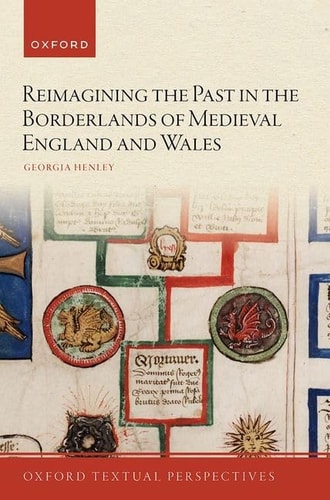
Reimagining the Past in the Borderlands of Medieval England and Wales
0
0
As an Amazon Associate and affiliate partner, Menrva Books earns from qualifying purchases. Learn more
Author Description
Challenging the standard view that England emerged as a dominant power and Wales faded into obscurity after Edward I's conquest in 1282, this book considers how Welsh (and British) history became an enduringly potent instrument of political power in the late Middle Ages. Brought into the broader stream of political consciousness by major baronial families from the March (the borderlands between England and Wales), this inventive history generated a new brand of literature interested in succession, land rights, and the origins of imperial power, as imagined by Geoffrey of Monmouth. These marcher families leveraged their ancestral, political, and ideological ties to Wales in order to strengthen their political power, both regionally and nationally, through the patronage of historical and genealogical texts that reimagined the Welsh past on their terms. In doing so, they brought ideas of Welsh history to a wider audience than previously recognized and came to have a profound effect on late medieval thought about empire, monarchy, and succession.
Menrva's Summary
THE THESIS
This book investigates how the appropriation of Welsh history by Anglo-Norman marcher families functioned as a strategic instrument of political power in late medieval England. Georgia Henley, a scholar specializing in medieval literature and history, utilizes a combination of genealogical records, patronage documents, and literary analysis to argue that these borderland elites actively reshaped historical narratives to legitimize their own authority. By examining the influence of Geoffrey of Monmouth’s texts, the author demonstrates how the Welsh past was repurposed to address contemporary concerns regarding succession, land tenure, and imperial identity.
THE SCOPE MAP
What You Will Find
- Analysis of the political influence of Marcher baronial families in the post-1282 era.
- Examination of the reception and adaptation of Geoffrey of Monmouth’s historical writings.
- Study of the intersection between genealogical literature and territorial claims.
Scope Limits
- The text focuses primarily on the political and literary output of the Marcher elite rather than a comprehensive history of the Welsh populace.
- It does not provide an exhaustive military history of the Edwardian conquest.
THE AUTHORITY PERSPECTIVE
Scholars in the field of medieval studies recognize this work as a significant contribution to the understanding of how historical memory was constructed and utilized in the borderlands. Readers frequently note the academic density of the prose, which is tailored for researchers and students of medieval political culture.
Page Count:
320
Publication Date:
2024-01-01
Publisher:
Oxford University Press
ISBN-10:
0192856472
ISBN-13:
9780192856470
History
Political History
British History
Literary Criticism
Welsh History
Community Tags
Other Editions(2)
Similar Books