Imagining AI: How the World Sees Intelligent Machines
0
0
As an Amazon Associate and affiliate partner, Menrva Books earns from qualifying purchases. Learn more
Author Description
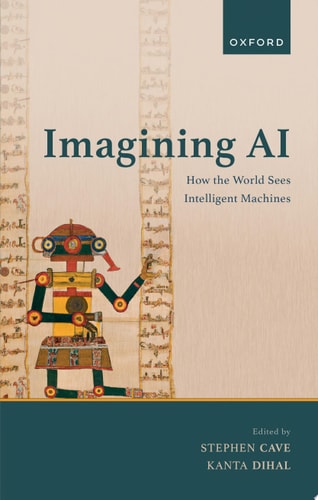
Chapters 16 and 19 from this book are published open access and are free to read or download from Oxford AcademicAI is now a global phenomenon. Yet Hollywood narratives dominate perceptions of AI in the English-speaking West and beyond, and much of the technology itself is shaped by a disproportionately white, male, US-based elite. However, different cultures have been imagining intelligent machines since long before we could build them, in visions that vary greatly across religious, philosophical, literary and cinematic traditions. This book aims to spotlight these alternative visions.Imagining AI draws attention to the range and variety of visions of a future with intelligent machines and their potential significance for the research, regulation, and implementation of AI. The book is structured geographically, with each chapter presenting insights into how a specific region or culture imagines intelligent machines. The contributors, leading experts from academia and the arts, explore how the encounters between local narratives, digital technologies, and mainstream Western narratives create new imaginaries and insights in different contexts across the globe. The narratives they analyse range from ancient philosophy to contemporary science fiction, and visual art to policy discourse.The book sheds new light on some of the most important themes in AI ethics, from the differences between Chinese and American visions of AI, to digital neo-colonialism. It is an essential work for anyone wishing to understand how different cultural contexts interplay with the most significant technology of our time.
Menrva's Summary
THE THESIS
This book investigates how diverse cultural, religious, and philosophical traditions across the globe shape the perception and development of artificial intelligence, challenging the dominance of Western-centric narratives. Editors Kanta Dihal and Stephen J. Cave curate a collection of essays from leading academic and artistic experts to examine how local imaginaries interact with mainstream digital technologies. By analyzing historical and contemporary sources, the authors argue that understanding these varied cultural contexts is critical for the ethical research, regulation, and implementation of AI systems.
THE SCOPE MAP
What You Will Find
- Geographic analysis of AI perceptions across diverse regions and cultures
- Comparative studies of Western versus non-Western technological imaginaries
- Interdisciplinary examination of ancient philosophy, contemporary science fiction, and policy discourse
Scope Limits
- The text does not provide a technical manual for AI development or engineering
- It does not offer a singular, unified prediction for the future of global AI regulation
THE AUTHORITY PERSPECTIVE
Experts recognize this volume as a significant contribution to the field of AI ethics and digital sociology. Readers frequently note the academic rigor of the essays and the value of the book in highlighting the risks of digital neo-colonialism.
Page Count:
448
Publication Date:
2023-08-25
Publisher:
Oxford University Press
ISBN-10:
0192865366
ISBN-13:
9780192865366
Philosophy
Human Interaction
Technology
Machine Learning
Media Studies
Sociology
Community Tags
Similar Books