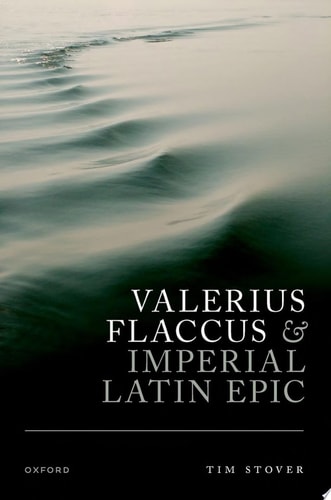
Valerius Flaccus and Imperial Latin Epic
0
0
As an Amazon Associate and affiliate partner, Menrva Books earns from qualifying purchases. Learn more
Author Description
This is the first book-length study of the reception of Valerius Flaccus' Argonautica in the epic poems of Silius Italicus (Punica), Statius (Thebaid, Achilleid), and Claudian (De Raptu Proserpinae). It sheds new light on the importance of Valerius' poem and enhances our understanding of the intertextual richness of imperial Latin epic. The readings offered in this book provide new evidence to support the view that Valerius' Argonautica predates the Punica and Thebaid, thus helping to clarify the literary history of the Flavian period (69-96 CE). Stover shows how Silius, Statius, and Claudian use programmatic allusion to the Argonautica to present themselves as Valerius' epic successors. Silius, Statius, and Claudian rework Valerian material to achieve various effects; analysis of these effects is organized by the primary function of allusive interactions, such as 'reversal', 'enrichment', and 'contrast'.This study is essential for scholars of Latin epic poetry. Yet the Greek and Latin of its close readings are translated, making it accessible to all readers interested in intertextuality, comparative literature, and other related topics.
Menrva's Summary
THE THESIS
This study investigates the literary reception of Valerius Flaccus' Argonautica within the works of later imperial Latin epic poets to establish its influence and chronological placement. Tim Stover, a scholar of classical literature, utilizes a comparative framework to analyze how Silius Italicus, Statius, and Claudian engaged with Valerian material. By examining programmatic allusions, the author argues that these poets positioned themselves as successors to Valerius, thereby clarifying the literary history of the Flavian period.
THE SCOPE MAP
What You Will Find
- Comparative analysis of Valerius Flaccus' Argonautica alongside the Punica, Thebaid, Achilleid, and De Raptu Proserpinae.
- A methodological framework categorizing allusive interactions into functions such as reversal, enrichment, and contrast.
- Evidence supporting the chronological priority of the Argonautica relative to the works of Silius and Statius.
Scope Limits
- The study focuses primarily on the reception of Valerius Flaccus rather than a comprehensive biography of the poet.
- The analysis is restricted to the specific influence of the Argonautica on the aforementioned imperial epic poets.
THE AUTHORITY PERSPECTIVE
Scholars recognize this work as a significant contribution to the study of Flavian epic and intertextual dynamics in Latin literature. The text is noted for its rigorous academic approach while remaining accessible to a broader audience through the inclusion of translations for all cited Greek and Latin passages.
Page Count:
224
Publication Date:
2023-01-01
Publisher:
Oxford University Press
ISBN-10:
0192870912
ISBN-13:
9780192870919
Poetry
Literary Criticism
Latin
Intertextuality
Epic Poetry
Community Tags
Similar Books