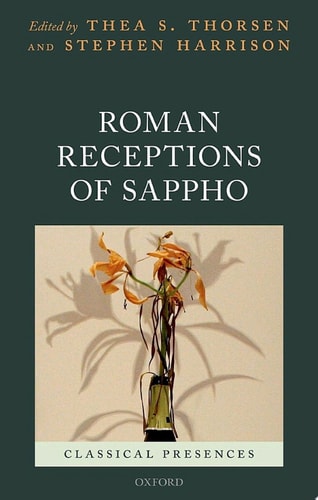
Roman Receptions of Sappho
0
0
As an Amazon Associate and affiliate partner, Menrva Books earns from qualifying purchases. Learn more
Author Description
Sappho, a towering figure in Western culture, is an exemplary case in the history of classical receptions. There are three prominent reasons for this. Firstly, Sappho is associated with some of the earliest poetry in the classical tradition, which makes her reception history one of the longest we know of. Furthermore, Sappho's poetry promotes ideologically challenging concepts such as female authority and homoeroticism, which have prompted very conspicuous interpretative strategies to deal with issues of gender and sexuality, revealing the values of the societies that have received her works through time. Finally, Sappho's legacy has been very well explored from the perspective of reception studies: important investigations have been made into responses both to her as poet-figure and to her poetry from her earliest reception through to our own time. However, one of the few eras in Sappho's longstanding reception history that has not been systematically explored before this volume is the Roman period. The omission is a paradox. Receptions of Sappho can be traced in more than eighteen Roman poets, among them many of the most central authors in the history of Latin literature. Surely, few other Greek poets can rival the impact of Sappho at Rome. This important fact calls out for a systematic approach to Sappho's Roman reception, which is the aim of Roman Receptions of Sappho that focuses on the poetry of the central period of Roman literary history, from the time of Lucretius to that of Martial.
Menrva's Summary
THE THESIS
This volume investigates the previously under-explored reception of the Greek poet Sappho within the context of Roman literature. Editors Stephen J. Harrison and Thea Selliaas Thorsen curate a collection of scholarly essays that analyze how Roman poets, from Lucretius to Martial, engaged with Sappho’s work. The text argues that Sappho’s influence on Latin literature is significant and paradoxical in its historical neglect, providing a systematic framework to understand how Roman authors adapted her themes of female authority and homoeroticism.
THE SCOPE MAP
What You Will Find
- Analysis of Sapphic influence across more than eighteen Roman poets.
- Examination of the central period of Roman literary history spanning from Lucretius to Martial.
- Scholarly exploration of interpretative strategies regarding gender and sexuality in classical texts.
Scope Limits
- The volume focuses specifically on the Roman period and does not provide a comprehensive history of Sappho's reception in later eras or modern literature.
THE AUTHORITY PERSPECTIVE
Scholars and classicists identify this work as a necessary intervention in the field of reception studies, effectively filling a notable gap in the academic literature. Readers frequently note the academic density of the prose, which is intended for researchers and students of classical antiquity.
Page Count:
471
Publication Date:
2018-01-01
Publisher:
OUP Oxford
ISBN-10:
019256482X
ISBN-13:
9780192564825
Poetry
History
Ancient History
Literary Criticism
Latin
Reception Studies
Community Tags
Similar Books