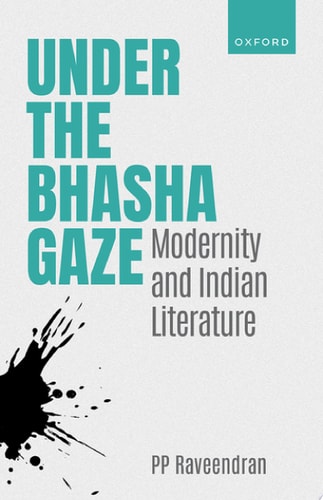
Under the Bhasha Gaze: Modernity and Indian Literature
0
0
As an Amazon Associate and affiliate partner, Menrva Books earns from qualifying purchases. Learn more
Author Description
The book is a study of literature in India in the context of recent discussions on modernity and its theoretical extensions such as the everyday and the social imaginary. It is a critique of the aesthetics and politics of modernity as they are embodied in Indian bhasha literature of the past two centuries. The primary objective of the book is to explore the trajectory of modernity after Indian literature encountered colonialism in the early 19th century. The intricate ways in which the bhasha imagination negotiated questions around concepts such as colonialism, aesthetics, the literary, the historical, and the social, have received focused attention in the analysis. Although the study acknowledges the European provenance of modernity as a historical idea, it also recognizes the inherent complexity of the concept and its equivocal connotations when used with reference to the polyphonic bhasha communities in India. Theoretical issues debated in relation to modernity such as its conceptual affinities with the western enlightenment project, its ideological investment in European aesthetics, and its implication for the evolution of what might be called the hermetic aesthetic are significant to this study. The work also examines the regional strengths of the social imaginary that render a conventionally conceived modernity inadequate in explaining the uniquely modern strengths of the Indian bhasha imagination.
Menrva's Summary
THE THESIS
This book investigates how the concept of modernity has been negotiated, adapted, and redefined within the context of Indian bhasha literature over the past two centuries. Prof. PP Raveendran utilizes a framework rooted in postcolonial theory and cultural studies to examine the intersection of European aesthetic ideals with the unique social imaginaries of diverse Indian linguistic communities. By analyzing the evolution of the literary form since the 19th century, the author argues that a singular, Western-centric definition of modernity fails to account for the polyphonic and complex nature of the Indian experience.
THE SCOPE MAP
What You Will Find
- Analysis of the impact of colonialism on Indian literary aesthetics.
- Theoretical exploration of the social imaginary and the everyday in a postcolonial context.
- Examination of the tension between Western enlightenment projects and regional bhasha expressions.
- Critique of the hermetic aesthetic in relation to historical and social shifts.
Scope Limits
- The study does not provide an exhaustive survey of every regional language but focuses on broader trends within the bhasha imagination.
- The text does not attempt to offer a definitive history of Indian literature but rather a theoretical critique of its modern trajectory.
THE AUTHORITY PERSPECTIVE
Scholars and critics recognize this work as a significant contribution to the theoretical discourse surrounding Indian literary studies and postcolonial modernity. Readers frequently note the academic density of the prose, which is intended for an audience familiar with critical theory and cultural history.
Page Count:
360
Publication Date:
2023-01-01
Publisher:
Oxford University Press
ISBN-10:
0192871552
ISBN-13:
9780192871558
Literary Criticism
Cultural History
Modernity
Indian
Community Tags
Similar Books