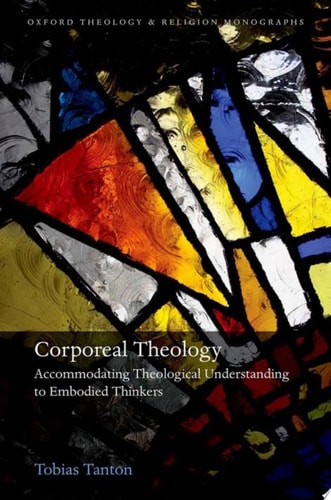
Corporeal Theology: Accommodating Theological Understanding to Embodied Thinkers
0
0
As an Amazon Associate and affiliate partner, Menrva Books earns from qualifying purchases. Learn more
Author Description
Appropriating insights from empirical findings and theoretical constructs of 'embodied cognition', this study explores how theological understanding is accommodated to the bodily nature of human cognition. The principle of divine accommodation provides a theological framework for considering the human cognitive capacities that are accommodated by theological concepts and ecclesial practices. A rich portrait of the nature of human cognitive capacities is drawn from an emerging paradigm in cognitive science, embodied cognition, which proposes that cognition depends upon bodily sensorimotor systems to ground concepts and to draw upon environmental resources.Embodied cognition's hypothesis that human concepts are grounded in sensorimotor states poses a theological quandary for God-concepts, since identifying God with sensorimotor content risks idolatry. The incarnation resolves this problem in theological epistemology by grounding God-concepts in bodily understanding, while avoiding idolatry. Thus, the incarnation represents an accommodation to human conceptual capacities.Embodied cognition further hypothesises that cognition relies on sensorimotor engagement with the world rather than internal mental representations. Subsequently, in addition to the brain, bodily states and environmental artefacts 'scaffold' cognitive processes. A scaffolded view of cognition highlights the cognitive import of embodied religious practices, which choregraph the body and curate material culture. Tobias Tanton applies dozens of studies identifying mechanisms by which bodily or environmental factors influence cognition to the embodied and material dimensions Christian practices. On account of their inherent cognitive effects, practices are theorised to have intrinsic 'embodied' meanings alongside 'symbolic' ones established by conventions. Consequently, liturgy is seen as a bearer of theological content rather than merely an expression of it; a locus of religious experience; and a crucial
Menrva's Summary
THE THESIS
How does the theological principle of divine accommodation reconcile the bodily nature of human cognition with the conceptual requirements of religious faith? Tobias Tanton, a scholar in theology and religion, investigates the intersection of cognitive science and Christian doctrine. He argues that the incarnation serves as a primary mechanism for grounding divine concepts within human sensorimotor capacities, thereby addressing the risk of idolatry while validating the role of physical religious practices.
THE SCOPE MAP
What You Will Find
- An application of embodied cognition theory to theological epistemology.
- Analysis of how sensorimotor states ground religious concepts.
- Examination of liturgical practices as cognitive scaffolds.
Scope Limits
- The study focuses primarily on Christian theology and practice.
- It does not provide an exhaustive survey of all cognitive science sub-disciplines.
THE AUTHORITY PERSPECTIVE
Experts recognize this work as a rigorous attempt to bridge the gap between empirical cognitive science and traditional theological frameworks. Readers frequently note the academic density of the prose, which requires a foundational understanding of both contemporary cognitive theory and systematic theology.
Page Count:
304
Publication Date:
2023-04-05
Publisher:
Oxford University Press
ISBN-10:
0192884581
ISBN-13:
9780192884589
Religion
Theology
Philosophy of
Epistemology
Community Tags
Similar Books