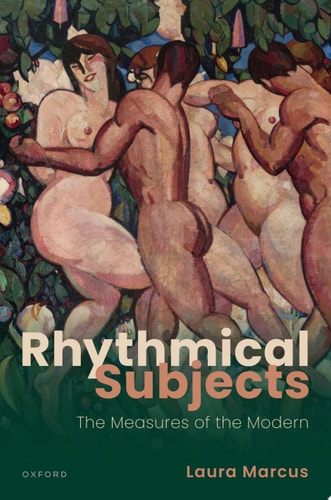
Rhythmical Subjects: The Measures of the Modern
0
0
As an Amazon Associate and affiliate partner, Menrva Books earns from qualifying purchases. Learn more
Author Description
Tracing a developing fascination with rhythm's significance, its patterns, and its measures, across philosophy, psychology, science, and the whole range of arts, Rhythmical Subjects shows how and why attention to rhythm came to serve as connective tissue between fields of inquiry at a time when modern disciplines were still in the process of formation or consolidation. The concentration on 'rhythm' and its cognates largely arose, Laura Marcus demonstrates, from the desire to reclaim or retain human and natural measures in the face of the coming of the machine and the speed of technological innovation. Rhythmical Subjects uncovers the disparate routes by which rhythm acquired its newfound ability to link ancient and modern forms of intellectual inquiry, and to fathom and re-invigorate temporal articulations of modern subjective life.Among the numerous intellectual and artistic developments set in a new light by this brilliantly wide-ranging book are: the long line of philosophical and theoretical writing on rhythm, from Nietzsche to Bergson and their twentieth-century interlocutors; psychological explorations of rhythm as the fundamental law of life, from Herbert Spencer and Ralph Waldo Emerson to Elsie Fogarty; more experimental engagements with psychology's rhythms, from Wilhelm Wundt, Théodule Ribot, and Karl Groos to the aesthetic writings of Vernon Lee; the history of prosody; pioneering applications of rhythm studies to social and sexual reform, by Havelock Ellis, Marie Stopes, D. H. Lawrence, and Mary Austin (among others); Lebensreform movements and the contribution of Rudolf Steiner and Emile Jaques-Dalcroze; and numerous endeavours in artistic and critical innovation, from the small modernist magazines of Bloomsbury and Paris to art salons and dance studios across Britain, Continental Europe, and America.
Menrva's Summary
THE THESIS
This work investigates how the concept of rhythm functioned as a vital intellectual bridge across philosophy, psychology, and the arts during the formation of modern disciplines. Laura Marcus, a scholar of modernism and intellectual history, utilizes a vast array of primary sources—ranging from philosophical treatises to experimental psychological studies—to argue that rhythm served as a humanistic counterweight to the rapid mechanization and technological acceleration of the early twentieth century.
THE SCOPE MAP
What You Will Find
- Analysis of philosophical discourse from Nietzsche to Bergson.
- Examination of psychological theories regarding rhythm as a fundamental law of life.
- Historical overview of prosody and its application in social and sexual reform movements.
- Documentation of artistic and cultural movements including the Bloomsbury group and European dance studios.
Scope Limits
- The text focuses primarily on Western intellectual and artistic traditions, excluding non-Western rhythmic frameworks.
- It does not provide a technical manual for musical or poetic composition.
THE AUTHORITY PERSPECTIVE
Scholars recognize this text as a comprehensive interdisciplinary study that effectively maps the intellectual history of rhythm in modern thought. Readers frequently note the academic density of the prose, which requires a strong background in modernist studies to fully synthesize the breadth of the material presented.
Page Count:
416
Publication Date:
2024-01-01
Publisher:
Oxford University Press
ISBN-10:
0192883887
ISBN-13:
9780192883889
Philosophy
Psychology
Aesthetics
Modernism
Cultural History
Literary Criticism
Community Tags
Similar Books