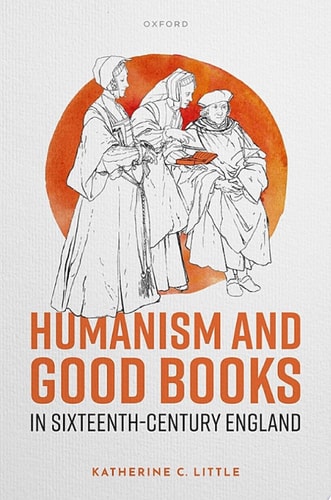
Humanism and Good Books in Sixteenth-Century England
0
0
As an Amazon Associate and affiliate partner, Menrva Books earns from qualifying purchases. Learn more
Author Description
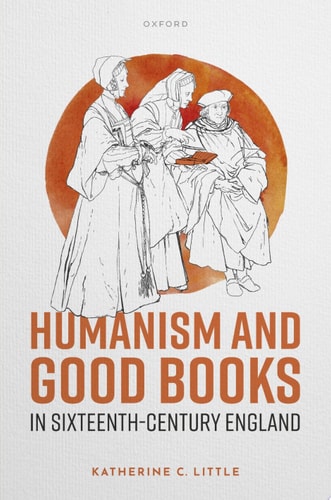
This book explores sixteenth-century humanism as an origin for the idea of literature as good, even great, books. It argues that humanists located the value of books not only in the goodness of their writing-their eloquence—but also in their capacity to shape readers in good and bad behavior, thoughts, and feelings, in other words, in their morality. To approach humanism in this way, by attending to its moral interests, is to provide a new perspective on periodization, the transition from the Middle Ages to the Renaissance / early modern. That is, humanists did not so much rupture with medieval ideas about literature or with medieval models as they adapted and altered them, offering a new confidence about an old idea: the moral instructiveness of pagan, classical texts for Christian readers. This revaluation of literature was a double-edged sword. On the one hand, humanist confidence inspired authors to invent their own good books—good in style and morals—in morality plays such as Everyman and the Christian Terence tradition and in educational treatises such as Sir Thomas Elyot's Boke of the Governour. On the other hand, humanism placed a new burden on authors, requiring their work to teach and delight. In the wake of humanism, authors struggled to articulate the value of their work for readers, returning to a pre-humanist path that they associated with Geoffrey Chaucer. This medieval-inflected doubt pervades the late sixteenth-century writings of the most prolific and influential Elizabethans-Robert Greene, George Gascoigne, and Edmund Spenser.
Menrva's Summary
THE THESIS
This book investigates how sixteenth-century humanism established the foundational concept of literature as a medium for moral instruction and behavioral shaping. Katherine C. Little, an academic scholar, examines the intersection of classical eloquence and Christian morality during the transition from the Middle Ages to the Renaissance. She argues that humanists did not break from medieval traditions but rather adapted them, creating a new framework where the value of a text was measured by its capacity to influence the reader's character.
THE SCOPE MAP
What You Will Find
- Analysis of the transition from medieval literary models to early modern humanism
- Examination of the Christian Terence tradition and morality plays like Everyman
- Discussion of educational treatises including Sir Thomas Elyot's Boke of the Governour
- Exploration of the influence of Geoffrey Chaucer on late sixteenth-century authors
Scope Limits
- The study focuses primarily on the English context of the sixteenth century
- It does not provide an exhaustive survey of all European humanist movements
THE AUTHORITY PERSPECTIVE
Scholars recognize this work as a significant contribution to the study of early modern literary theory and the history of reading practices. Experts highlight the author's ability to bridge the gap between medieval and Renaissance intellectual history through a focused analysis of moral didacticism.
Page Count:
396
Publication Date:
2023-01-01
Publisher:
OUP Oxford
ISBN-10:
0192883216
ISBN-13:
9780192883216
History
English & College Success
Early Modern
English
Humanism
Literary Criticism
Educational History