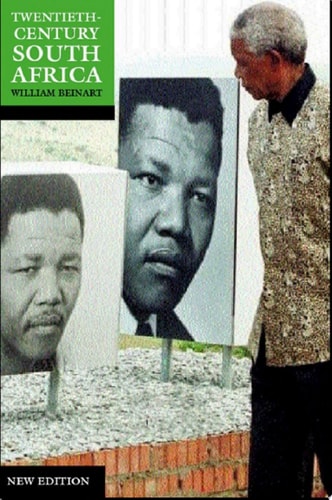
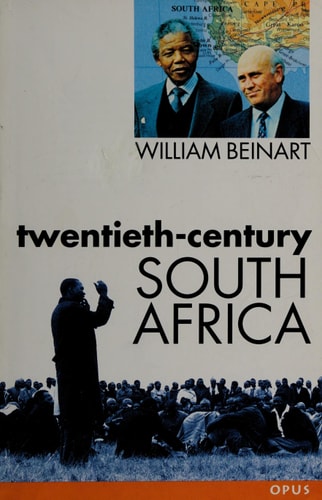
Twentieth-Century South Africa
0
0
As an Amazon Associate and affiliate partner, Menrva Books earns from qualifying purchases. Learn more
Author Description
An innovative examination of the forces - both destructive and dynamic - which have shaped twentieth-century South Africa. This book provides a stimulating introduction to the history of South Africa in the twentieth century. It draws on the rich and lively tradition of radical history writing on that country and, to a greater extent than previous accounts, weaves economic and cultural history into the political narrative. Apartheid and industrialization, especially mining, are central theme, as is the rise of nationalism in the Afrikaner and African communities. But the author also emphasizes the neglected significance of rural experiences and local identities in shaping political consciousness. The roles played by such key figure as Smuts, Verwoerd, de Klerk, Plaatje, and Mandela are explored, while recent historiographical trends are reflected in analyses of rural protest, white cultural politics, the vitality of black urban life, and environmental decay. The book assesses the analysis of black reactions to apartheid, the rise of the ANC. The concluding chapter brings this seminal history up-to-date, tackling the issues and events from 1994-1999 - in particular the success of Mandela and the ANC in seeing through the end of apartheid rule. It also looks at the chances of a stable future for the new-found democracy in South Africa.
Menrva's Summary
THE THESIS
This work investigates the complex interplay of economic, cultural, and political forces that defined the trajectory of South Africa throughout the twentieth century. William Beinart, a historian specializing in Southern African studies, utilizes a framework that integrates traditional political narratives with social and environmental history. By synthesizing radical historiography with contemporary analysis, the author examines how industrialization, nationalism, and rural experiences collectively shaped the nation's political consciousness.
THE SCOPE MAP
What You Will Find
- Analysis of the impact of mining and industrialization on national development
- Examination of Afrikaner and African nationalism
- Exploration of rural protest and local identity formation
- Assessment of the rise of the ANC and the dismantling of apartheid
- Coverage of the transition period from 1994 to 1999
Scope Limits
- The text focuses primarily on the twentieth century and does not provide an extensive analysis of pre-colonial history
- While it covers key political figures, it is not a comprehensive biographical study of those individuals
THE AUTHORITY PERSPECTIVE
Experts recognize this text as a foundational introduction that successfully bridges the gap between academic historiography and accessible narrative. Readers frequently note the balance between macro-political events and the nuanced inclusion of cultural and environmental factors.
Page Count:
433
Publication Date:
2001-01-01
Publisher:
OUP Oxford
ISBN-10:
019160674X
ISBN-13:
9780191606748
History
Economic History
South Africa
Social History
Political History
African history
Community Tags
Other Editions(4)


Similar Books