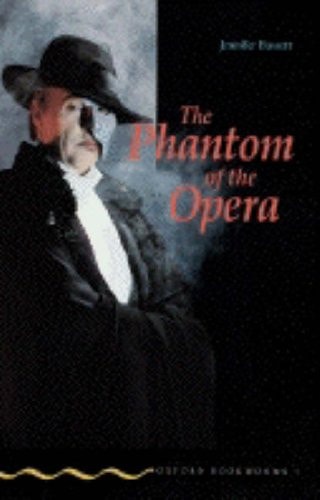
Oxford Bookworms 1: The Phantom of the Opera
0
0
As an Amazon Associate and affiliate partner, Menrva Books earns from qualifying purchases. Learn more
Author Description
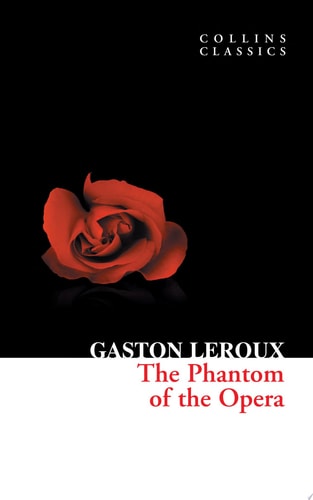
First published in French as a serial in 1909, The Phantom of the Opera is a riveting story that revolves around the young, Swedish Christine Daaé. Her father, a famous musician, dies, and she is raised in the Paris Opera House with his dying promise of a protective angel of music to guide her. After a time at the opera house, she begins hearing a voice, who eventually teaches her how to sing beautifully. All goes well until Christine's childhood friend Raoul comes to visit his parents, who are patrons of the opera, and he sees Christine when she begins successfully singing on the stage. The voice, who is the deformed, murderous 'ghost' of the opera house named Erik, however, grows violent in his terrible jealousy, until Christine suddenly disappears. The phantom is in love, but it can only spell disaster. Leroux's work, with characters ranging from the spoiled prima donna Carlotta to the mysterious Persian from Erik's past, has been immortalized by memorable adaptations. Despite this, it remains a remarkable piece of Gothic horror literature in and of itself, deeper and darker than any version that follows.
Menrva's Summary
THE PULSE
A disfigured musical genius haunts the Paris Opera House, obsessively manipulating a young soprano to secure her devotion. Christine Daaé, a talented singer mourning her father, believes she is guided by a divine angel of music, unaware that her mentor is the murderous Erik. When her childhood friend Raoul re-enters her life, the Phantom’s jealousy triggers a series of violent interventions. The narrative unfolds through a blend of mystery and psychological tension, documenting the collision between Christine’s artistic aspirations and the possessive demands of her hidden tutor.
INSIDE THE PAGES
- Atmospheric setting within the labyrinthine Paris Opera House
- Exploration of the intersection between obsession and artistic genius
- Gothic horror elements featuring a masked, reclusive antagonist
- Dual perspective on the nature of love and possessiveness
- Use of musical performance as a narrative catalyst
- Tension-filled sequences involving secret passages and underground chambers
- Character archetypes including the prima donna and the mysterious benefactor
- Pacing that builds from a slow-burning mystery to a dramatic confrontation
THE COLLECTIVE ECHO
Readers frequently highlight the dark, atmospheric quality of the original text compared to its numerous stage and screen adaptations. Discussion often centers on the complex morality of Erik, whose actions oscillate between tragic vulnerability and cold-blooded violence. Critics note that the prose effectively captures the claustrophobic tension of the opera house setting. The balance between the central romance and the underlying horror elements remains a primary point of interest for those examining the Gothic genre. Many readers appreciate how the narrative explores the destructive potential of unchecked obsession within the arts.
Page Count:
44
Publication Date:
1993-01-01
Publisher:
Oxford University Press España, S.A.
ISBN-10:
0194227073
ISBN-13:
9780194227070
Romance
Horror
Mystery
Fiction - Horror
Composers
Gothic
Fiction gothic
Paris France
classic
Phantom of the opera fictitious character fiction
France fiction
Community Tags
Similar Books