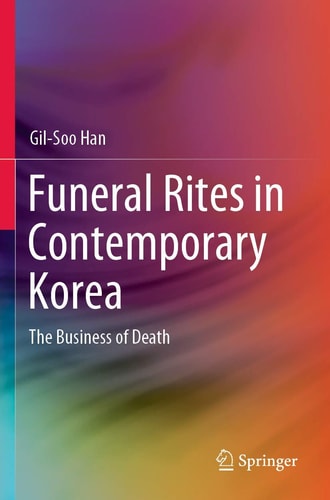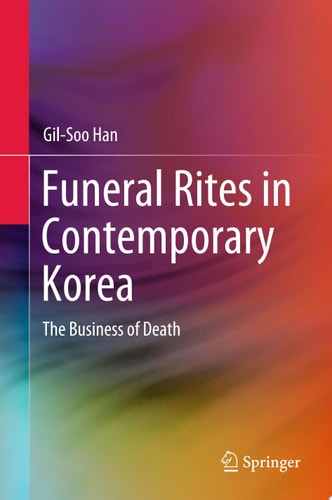
Funeral Rites in Contemporary Korea
0
0
As an Amazon Associate and affiliate partner, Menrva Books earns from qualifying purchases. Learn more
Author Description
This book explores 21st century Korean society on the basis of its dramatically transforming and rapidly expanding commercial funeral industry. With insights into contemporary Confucianism, shamanism and filial piety, as well as modernisation, urbanisation, the division of labour and the digitalisation of consumption, it is the first study of its kind to offer a sophisticated, integrated sociological analysis of how the commodification of death intersects with capitalism, popular culture and everyday life in contemporary Korea. Through innovative analyses of funeral advertising and journalism, screen and literary representations of funerals, online media, consumer accounts of using funeral services and other sources, it offers a complex picture of the widespread effects of economic development, urbanisation and modernisation in South Korean society over the past quarter century. In the aftermath of the Korean “economic miracle” novel ways of paying respect to deceased kin have emerged; using Max Weber's concept of “pariah capitalism”, Gil-Soo Han shows how the heightened obsession with and boom in the commodification of death in Korea reflects radical transformations in both capital and culture. Winner of Korean Education Minister’s Book Prize 2020
Menrva's Summary
THE THESIS
This book investigates the profound societal shifts in contemporary South Korea as evidenced by the dramatic transformation and expansion of its commercial funeral industry. Gil-Soo Han, drawing on insights from contemporary Confucianism, shamanism, filial piety, modernization, urbanization, and the digitalization of consumption, presents the first integrated sociological analysis of how the commodification of death intersects with capitalism, popular culture, and everyday life. The study examines funeral advertising, journalism, screen and literary representations, online media, and consumer accounts to illustrate the widespread effects of economic development over the past quarter century. Utilizing Max Weber's concept of 'pariah capitalism,' the book argues that the boom in the commodification of death reflects radical transformations in both Korean capital and culture.
THE SCOPE MAP
- Analysis of the contemporary Confucian, shamanistic, and filial piety influences on Korean funeral rites.
- Examination of the impact of modernization, urbanization, and the division of labor on death rituals.
- Exploration of the digitalization of consumption and its role in the funeral industry.
- Sociological analysis of the intersection between the commodification of death and capitalism.
- Case studies of funeral advertising and journalism in South Korea.
- Analysis of screen and literary representations of funerals.
- Investigation of online media and consumer accounts related to funeral services.
- Application of Max Weber's concept of 'pariah capitalism' to the Korean context.
THE AUTHORITY PERSPECTIVE
This book was recognized with the Korean Education Minister’s Book Prize in 2020, indicating significant academic and governmental acknowledgment. The work offers a sophisticated, integrated sociological analysis of a unique intersection of cultural and economic phenomena. Its comprehensive approach, utilizing diverse sources from advertising to online media, provides a complex picture of societal changes. The book is positioned as a key study for understanding the impact of economic development and modernization on cultural practices in South Korea.
Page Count:
231
Publication Date:
2019-05-22
Publisher:
Springer Nature
ISBN-10:
9811378525
ISBN-13:
9789811378522
Business
History
Non-Fiction
Capitalism
Death Studies
Sociology
South Korea
Community Tags
Similar Books