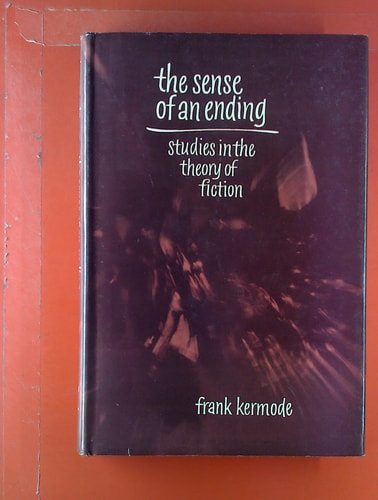
The Sense of an Ending: Studies in the Theory of Fiction
0
0
As an Amazon Associate and affiliate partner, Menrva Books earns from qualifying purchases. Learn more
Author Description
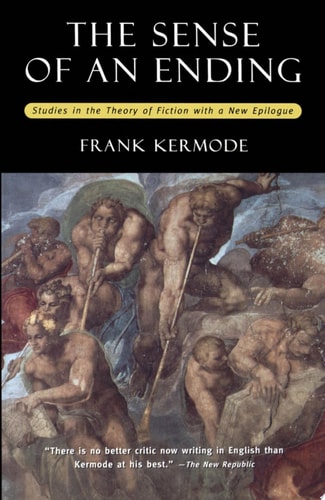
s/t: With a New EpilogueFrank Kermode is one of our most distinguished and beloved critics of English literature. Here, he contributes a new epilogue to his collection of classic lectures on the relationship of fiction to age-old concepts of apocalyptic chaos and crisis. Prompted by the approach of the millennium, he revisits the book which brings his highly concentrated insights to bear on some of the most unyielding philosophical and aesthetic enigmas. Examining the works of writers from Plato to William Burrows, Kermode shows how they have persistently imposed their "fictions" upon the face of eternity and how these have reflected the apocalyptic spirit. Kermode then discusses literature at a time when new fictive explanations, as used by Spenser and Shakespeare, were being devised to fit a world of uncertain beginning and end. He goes on to deal perceptively with modern literaturewith "traditionalists" such as Yeats, Eliot, and Joyce, as well as contemporary "schismatics," the French "new novelists," and such seminal figures as Jean-Paul Sartre and Samuel Beckett. Whether weighing the difference between modern and earlier modes of apocalyptic thought, considering the degeneration of fiction into myth, or commenting on the vogue of the Absurd, Kermode is distinctly lucid, persuasive, witty, and prodigal of ideas.
Menrva's Summary
THE THESIS
How do human beings construct narrative fictions to impose order and meaning upon the chaotic, apocalyptic nature of time and existence? Frank Kermode, a preeminent scholar of English literature, utilizes this foundational text to examine the intersection of temporal philosophy and aesthetic structure. By analyzing the evolution of literary form from classical antiquity to the mid-twentieth century, Kermode argues that our need for 'ends'—or coherent conclusions—is a fundamental psychological drive that shapes how we write and interpret stories.
THE SCOPE MAP
What You Will Find
- An analysis of the relationship between apocalyptic thought and narrative structure.
- A historical survey of literary theory spanning from Plato to William Burroughs.
- Comparative studies of traditionalist writers like Yeats and Eliot alongside modernists like Beckett and Sartre.
- A philosophical framework for understanding how 'fictions' function as tools to manage the uncertainty of human beginnings and endings.
THE AUTHORITY PERSPECTIVE
Scholars and critics widely regard this work as a foundational text in the study of narrative theory and the philosophy of fiction. Readers frequently note the intellectual density of the prose, which requires careful engagement with Kermode's erudite synthesis of theology, history, and literary analysis.
Page Count:
187
Publication Date:
1967-01-01
Publisher:
Oxford University Press
ISBN-10:
0195006011
ISBN-13:
9780195006018
Non-Fiction
Politics
Philosophy
Literary Criticism
Criticism & Theory
Literary theory
Community Tags
Other Editions(4)
Similar Books

Reader Comments
Share Your Thoughts
No comments yet. Be the first to share your thoughts!