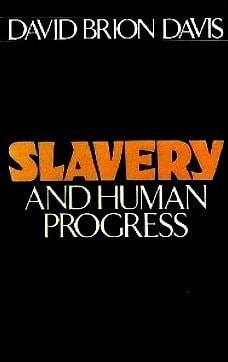
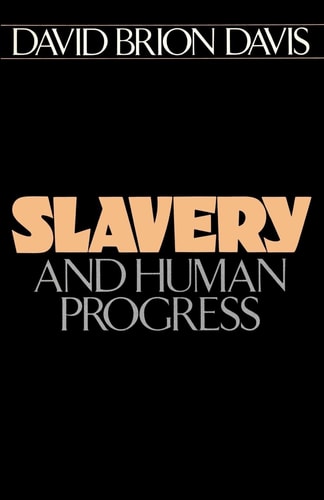
Slavery and Human Progress
0
0
As an Amazon Associate and affiliate partner, Menrva Books earns from qualifying purchases. Learn more
Author Description
Pulitzer Prize-winner David Brion Davis here provides a penetrating survey of slavery and emancipation from ancient times to the twentieth century. His trenchant analysis puts the most recent international debates about freedom and human rights into much-needed perspective. Davis shows that slavery was once regarded as a form of human progress, playing a critical role in the expansion of the western world. It was not until the eighteenth and nineteenth centuries that views of slavery as a retrograde institution gained far-reaching acceptance. Davis illuminates this momentous historical shift from "progressive" enslavement to "progressive" emancipation, ranging over an array of important developments--from the slave trade of early Muslims and Jews to twentieth-century debates over slavery in the League of Nations and the United Nations. In probing the intricate connections among slavery, emancipation, and the idea of progress, Davis sheds new light on two crucial issues: the human capacity for dignifying acts of oppression and the problem of implementing social change.
Menrva's Summary
THE THESIS
This work investigates the historical paradox of how slavery was once conceptualized as a mechanism for human progress and how that perception shifted toward abolition. David Brion Davis, a Pulitzer Prize-winning historian, utilizes a broad historical framework to examine the evolution of societal attitudes toward forced labor. By analyzing the transition from ancient justifications of enslavement to the modern international consensus on human rights, the author provides a rigorous examination of the ideological shifts that enabled this transformation. The text evaluates the role of slavery in the expansion of Western civilization and the subsequent intellectual movements that redefined it as a retrograde institution.
THE SCOPE MAP
What You Will Find
- A comprehensive historical survey of slavery and emancipation from antiquity through the twentieth century.
- Analysis of the ideological justifications used to frame slavery as a form of human progress.
- Examination of the slave trade practices across diverse cultures, including early Muslim and Jewish societies.
- Discussion of twentieth-century international policy debates regarding slavery within the League of Nations and the United Nations.
THE AUTHORITY PERSPECTIVE
Experts recognize this text as a foundational analysis of the intellectual history surrounding human bondage and the implementation of social change. Readers frequently note the academic density of the prose and the author's ability to synthesize complex historical developments into a coherent argument.
Page Count:
374
Publication Date:
1984-10-04
Publisher:
Oxford University Press
ISBN-10:
0195034392
ISBN-13:
9780195034394
History
Social Science
Human rights
Slavery
Community Tags
Other Editions(3)

Similar Books