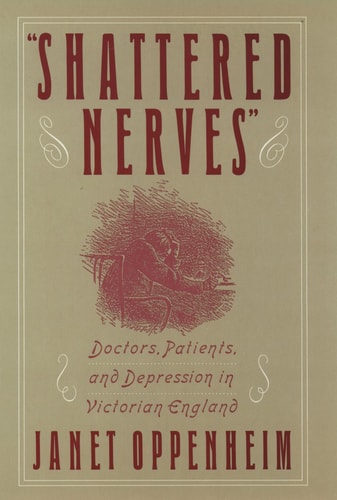
Shattered Nerves: Doctors, Patients, and Depression in Victorian England
0
0
As an Amazon Associate and affiliate partner, Menrva Books earns from qualifying purchases. Learn more
Author Description
No Victorian portrait of nervous breakdown is more celebrated than John Stuart Mill's description of his own crisis recounted in his Autobiography. But Mill was only the most notable British Victorian to suffer from "shattered nerves," for depression appears again and again in nineteenth-century history and literature, among men and women of all classes. It was a problem that doctors struggled to understand and treat--largely unsuccessfully. Their debates over the nature of depression, Janet Oppenheim writes, offer us a unique window on the Victorian mind.In "Shattered Nerves", Oppenheim looks at how British doctors and patients tried to make sense of depression in an era of limited psychological knowledge and intense social prejudices. Ranging from the dawn of the Victorian era to the First World War, she draws on letters, memoirs, medical reports, literature, and many other sources to paint a detailed portrait of the slowly evolving knowledge of mental illness. She reveals how a host of "nerve specialists" searched for the physical causes of mental depression--even the term "nervous breakdown" came from the belief that mental health depended on maintaining supplies of "nerve force," much like recharging a battery. Especially interesting are her rich descriptions of the impact of Victorian prejudices on the ways in which doctors and patients viewed depression. Overwork and worries about money and other manly responsibilities were seen as acceptable causes of nervous collapse among men--in contrast to the range of sexual causes, including masturbation, which Victorian doctors frequently found at the root of male mental illness. Women, it was assumed, were naturally prone to hysteria and depression--and if they made the mistake of competing with men or pursuing higher education, then mental derangement was sure to follow. On the other hand, Oppenheim also reveals a number of surprises about Victorian medical thinking: For instance, even though Freud's revolution went
Menrva's Summary
THE THESIS
How did Victorian medical practitioners and society conceptualize, diagnose, and attempt to treat the pervasive phenomenon of depression during a period of rapid social and scientific change? Janet Oppenheim, a historian of nineteenth-century medicine, examines the intersection of clinical practice and cultural prejudice to explain the evolution of mental health understanding. By analyzing a diverse array of primary sources, including medical journals, personal correspondence, and literature, she argues that the Victorian struggle to define 'nervous breakdown' reflects the era's broader anxieties regarding gender, class, and the limits of biological science.
THE SCOPE MAP
What You Will Find
- Historical analysis of the Victorian medical transition from moral philosophy to early neurology.
- Examination of the 'nerve force' theory and its role in shaping 19th-century psychiatric treatment.
- Comparative study of gendered medical biases, contrasting male overwork with female hysteria.
- Synthesis of primary source materials including memoirs, medical reports, and contemporary literature.
THE AUTHORITY PERSPECTIVE
Scholars and historians frequently cite this work as a foundational text for understanding the cultural history of psychiatry in Britain. Readers often note the meticulous research and the author's ability to bridge the gap between clinical medical history and social history.
Page Count:
388
Publication Date:
1991-03-28
Publisher:
Oxford University Press
ISBN-10:
0195057813
ISBN-13:
9780195057812
Psychology
History
MEDICAL History
Victorian Era
Mental Health
Community Tags
Other Editions(2)

Similar Books









Reader Comments
Share Your Thoughts
No comments yet. Be the first to share your thoughts!