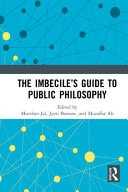
The Imbecile's Guide to Public Philosophy
0
0
As an Amazon Associate and affiliate partner, Menrva Books earns from qualifying purchases. Learn more
Author Description
This book studies the role of serious philosophizing in everyday life and looks at how authoritarianism negates philosophical and public reason. It sheds light on how philosophy can go beyond its life as a discipline limited to an esoteric group of academia to manifest itself via radical discursive practices in public life which enable us to understand and resolve contemporary socio-political challenges. It studies philosophy as a discipline which deals with one's orientations based on experience, the logic of reasoning, critical thinking, and most of all radical and progressive beliefs. The book argues that the contemporary rise of capitalism in modern society, resonating âEmile Durkheim's cautions on 'anomie', has favoured individualism, differentiation, marginalization, and exploitation, balanced on an eroding collective consciousness and a steady disintegration of humanity and reason. Taking this into consideration, it discusses how philosophy, both mainstream and marginal, can revive democracy in society which then is able to confront global authoritarianism led by the figure of the imbecile. Finally, it also provides a range of new perspectives on the questions of civic freedom, hegemony of language, social justice, identity, invisible paradigms, gender justice, democracy, multiculturalism, and decolonization. This volume is an invigorating compilation of essays from diverse disciplines, engaging the need to create a humanistic public philosophy to transcend the state of imbecility. It will be of great interest to students, scholars and researchers of philosophy, contemporary politics, history, and sociology, as well as general readers
Menrva's Summary
THE THESIS
This book investigates the critical role of public philosophy in combating authoritarianism and the erosion of reason in contemporary society. The authors, drawing on diverse academic disciplines, argue that philosophy must move beyond academic confines to actively engage with socio-political challenges. They examine how modern capitalism, with its emphasis on individualism and exploitation, has led to societal fragmentation and a decline in collective consciousness. The book posits that both mainstream and marginal philosophical thought can revitalize democracy and challenge global authoritarianism, particularly when led by figures embodying 'imbecility'. It offers new perspectives on crucial issues such as civic freedom, language hegemony, social justice, identity, gender justice, multiculturalism, and decolonization, advocating for a humanistic public philosophy.
THE SCOPE MAP
- Analysis of how authoritarianism undermines philosophical and public reason.
- Exploration of philosophy's potential to manifest through radical discursive practices in public life.
- Examination of contemporary capitalism's impact on individualism, marginalization, and collective consciousness, referencing Durkheim's 'anomie'.
- Discussion on how philosophy can revive democracy to confront global authoritarianism.
- New perspectives on civic freedom, language, social justice, identity, gender justice, democracy, multiculturalism, and decolonization.
- Compilation of essays from diverse disciplines aiming to create a humanistic public philosophy.
- Focus on transcending a state of societal 'imbecility' through critical thought and progressive beliefs.
THE AUTHORITY PERSPECTIVE
This volume is presented as an invigorating compilation of essays from diverse disciplines, intended to spark interest among students, scholars, and researchers of philosophy, contemporary politics, history, and sociology, as well as general readers. The collection aims to foster a humanistic public philosophy capable of addressing contemporary socio-political challenges and confronting global authoritarianism. It seeks to demonstrate philosophy's relevance beyond academia by engaging with radical discursive practices and progressive beliefs. The book's contributors offer a range of new perspectives on critical issues facing society today.
Page Count:
206
Publication Date:
2021-09-01
Publisher:
Routledge
ISBN-10:
1003207561
ISBN-13:
9781003207566
Politics
Non-Fiction
Philosophy
Sociology
Community Tags
Similar Books