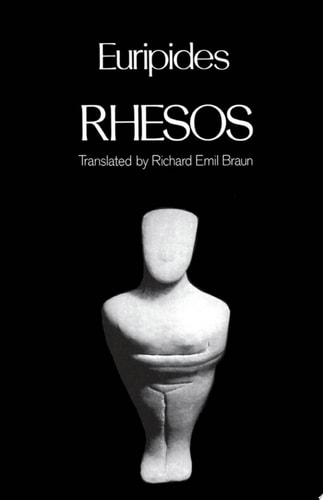
Rhesos
0
0
As an Amazon Associate and affiliate partner, Menrva Books earns from qualifying purchases. Learn more
Author Description
The story of a futile quest for knowledge, this ancient anti-war drama is one of the neglected plays within the corpus of Greek tragedy. Euripides' shortest tragic work, Rhesos is unique in lacking a prologue, provoking some scholars to the conclusion that the beginning of the play has been lost.In this exciting translation, Rhesos is no longer treated as a derivative Euripidean work, but rather as the tightly-knit tragedy of knowledge it really is. A drama in which profound problems of fate and free will come alive, Rhesos is also an exploration of the perversion of values that come as the result of war. Charged with a striking immediacy, this play is contemporary in the questions it raises, and eternal in its quest for truth.
Menrva's Summary
THE PULSE
The play centers on the arrival and sudden death of the Thracian king Rhesos during the Trojan War, exposing the futility of human ambition amidst divine manipulation. The narrative follows the Greek and Trojan forces as they navigate a night of tactical maneuvering and betrayal, driven by the desire for military advantage. The characters operate under the constraints of divine intervention and the rigid expectations of heroic honor, leading to a tragic outcome that questions the nature of fate. Presented in a dramatic verse format, the play unfolds in real-time, focusing on the immediate consequences of the characters' choices and the shifting loyalties of the battlefield.
INSIDE THE PAGES
- Absence of a traditional prologue, creating an abrupt entry into the conflict
- Focus on the psychological toll of war on both soldiers and leaders
- Exploration of the tension between human free will and divine orchestration
- Tight, fast-paced structure that emphasizes the urgency of the night's events
- Examination of the perversion of moral values in the context of prolonged combat
- Use of dramatic irony to highlight the characters' ignorance of their impending fates
- Emphasis on the contrast between the Thracian king's hubris and his sudden demise
- Philosophical inquiry into the nature of knowledge and the limitations of human foresight
THE COLLECTIVE ECHO
Discussion often centers on the authorship and stylistic anomalies that distinguish this play from other works in the Euripidean corpus. Readers frequently highlight the play's unique pacing and its departure from standard tragic conventions, which some critics attribute to its potential status as a later or collaborative work. The atmosphere is consistently described as tense and immediate, effectively capturing the chaotic nature of nocturnal warfare. Scholars and enthusiasts alike focus on the thematic exploration of fate versus human agency, noting that the play remains a significant, if often overlooked, contribution to the study of ancient drama. The work is widely regarded as a compelling example of how classical themes regarding the morality of war continue to resonate with modern audiences.
Page Count:
112
Publication Date:
1992-01-30
Publisher:
Oxford University Press
ISBN-10:
0195072898
ISBN-13:
9780195072891
Drama
Plays
English drama
Classical
War
Dramatic works
Greek Tragedy
Community Tags
Similar Books