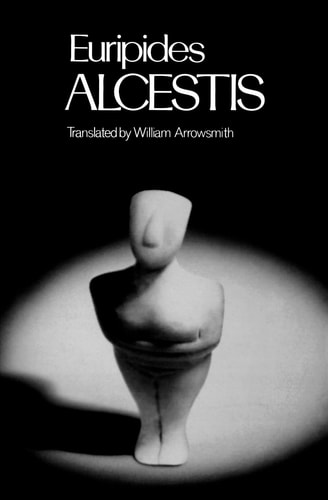
Alcestis
0
0
As an Amazon Associate and affiliate partner, Menrva Books earns from qualifying purchases. Learn more
Author Description
At once a vigorous translation of one of Euripides' most subtle and witty plays, and a wholly fresh interpretation, this version reveals for the first time the extraordinary formal beauty and thematic concentration of the Alcestis.The late William Arrowsmith, who was an eminent classical scholar, translator, and General Editor of this highly praised series, rejects the standard view of the Alcestis as a psychological study of the egotist Admetos and his naive but devoted wife. His translation, instead, presents the play as a drama of human existence--in keeping with the tradition of Greek tragedy--with recognizably human characters who also represent masked embodiments of human conditions. The Alcestis thus becomes a metaphysical tragicomedy in which Admetos, who has heretofore led a life without limitations, learns to "think mortal thoughts." He acquires the knowledge of limits--the acceptance of death as well as the duty to live--which, according to Euripides, makes people meaningfully human and capable of both courage and compassion. This new interpretation compellingly argues that, for Euripides, suffering humanizes, that exemption makes a man selfish and childish, and that only the courage to accept both life and death leads to the realization of one's humanity, and, in the case of Alcestis, to heroism.
Menrva's Summary
THE PULSE
The play centers on the crisis of Alcestis, who agrees to die in place of her husband, Admetos, to satisfy a divine bargain. Admetos, a king who has lived without consequence, faces the sudden reality of mortality when his wife sacrifices herself to save him from an early death. The narrative follows the aftermath of this decision, examining the reactions of the household and the intervention of Heracles. Written in the traditional structure of Greek drama, the play utilizes choral odes and dialogue to explore the tension between divine intervention and human limitation. The work functions as a tragicomedy, balancing the gravity of death with the absurdity of Admetos's predicament.
INSIDE THE PAGES
- Utilization of the traditional Greek chorus to provide moral commentary and emotional framing.
- Exploration of the tragicomic genre, blending elements of high drama with ironic, lighthearted moments.
- Characterization of Admetos as a flawed protagonist forced to confront his own selfishness.
- Thematic focus on the acceptance of mortality as a prerequisite for human maturity.
- Use of mythological figures, including Apollo and Thanatos, to drive the inciting incident.
- Examination of the social and domestic duties expected of women in ancient Greek society.
- Incorporation of the hero Heracles as a catalyst for resolution and comic relief.
- Emphasis on the formal beauty of the verse through a modern, accessible translation.
THE COLLECTIVE ECHO
Readers and critics frequently highlight the play's unique position within the Euripidean canon due to its ambiguous tone. Discussion often centers on the moral complexity of Admetos, with many debating whether his character arc constitutes genuine growth or mere self-pity. The translation by William Arrowsmith is widely praised for its ability to strip away centuries of academic bias, allowing the text to function as a living drama rather than a static artifact. Scholars often note that the play's focus on the domestic sphere provides a stark contrast to the more martial themes found in other Greek tragedies. The work remains a frequent subject of study for those interested in the intersection of human suffering and the development of compassion.
Page Count:
142
Publication Date:
1990-02-01
Publisher:
Oxford University Press
ISBN-10:
0195061667
ISBN-13:
9780195061666
Drama
Dramatic works
Mythology
Classical
Plays
Greek Tragedy
Community Tags
Other Editions(17)
Phoemixx Classics Ebooks
2021
Default edition
Alpha Editions
2021

Independently Published
2019
Wilder Publications, Incorporated
2018

CreateSpace Independent Publishing Platform
2018

CreateSpace Independent Publishing Platform
2017

CreateSpace Independent Publishing Platform
2017

Editorial Minimal
2015
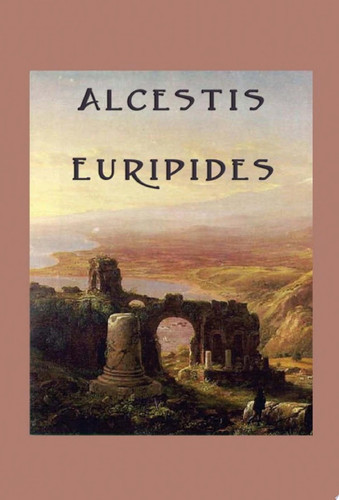
Simon & Schuster
2013

Nabu Press
2010

Hard Press
2006
Digireads.com
2006

De Gruyter
1998
Oxford University Press
1990
Oxford University Press
1978

Prentice-Hall
1974

Unwin Hyman
1915
Similar Books


Reader Comments
Share Your Thoughts
No comments yet. Be the first to share your thoughts!