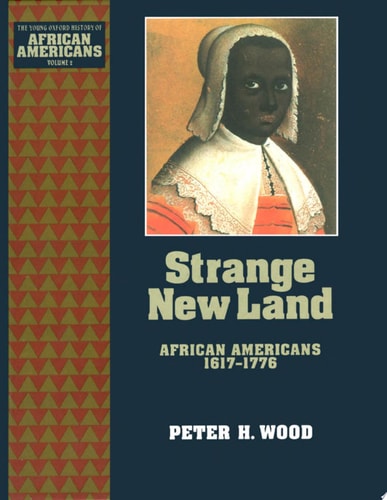
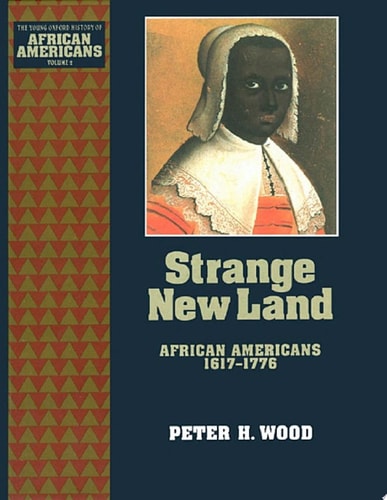
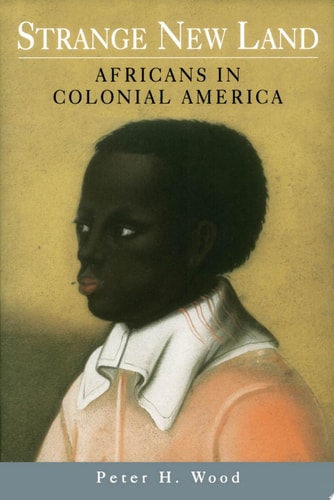
Strange New Land: African Americans 1617-1776
0
0
As an Amazon Associate and affiliate partner, Menrva Books earns from qualifying purchases. Learn more
Author Description
For Africans who survived the trans-Atlantic journey and were forced to disembark at one of the many ports along the coast of Britain's North American colonies, what lay before them was indeed a strange new land. Although forms of bondage had existed in West and Central Africa long before the trans Atlantic slave trade began, human beings were rarely the main commodity at the marketplace. Here in the modern world, the enslaved African was inspected, assessed, auctioned, bought, sold, bartered, and treated in any manner the owner saw fit.Slaves did not always cooperate. They fought and ran away, or made the business of commercial farming more difficult by not working efficiently. In spite of their condition and despite different ethnic backgrounds and languages, enslaved Africans forged a strong sense of community. The Africans learned the English language and made it their own. They learned Christianity and transformed it. Others held fast to Islam or combined their own spiritual beliefs with the faith of their masters. And all around them they heard talk of liberty and freedom, of the rights of man. Not surprisingly, many enslaved Africans embraced the idea of liberty as a fundamental right, and some even petitioned colonial administrators, insisting on that right. But the majority simply stole themselves and headed to Northern cities where slavery was less visible and where they might blend in more easily.Strange New Land explores the history of slavery and the struggle for freedom before the United States became a nation. Beginning with the colonization of North America, it documents the transformation of slavery from a brutal form of indentured servitude to a full-blown system of racial domination. More importantly, it surveys black social and cultural life, illustrating just how such a diverse group of people from the shores and hinterlands of West and Central Africa became a community in North America that survives and flourishes today.
Menrva's Summary
THE THESIS
This work investigates how enslaved Africans in colonial North America navigated the transition from indentured servitude to a rigid system of racialized chattel slavery while simultaneously forging a distinct cultural identity. Peter H. Wood, a historian specializing in early American history, utilizes primary source records and social history methodologies to examine the lived experiences of Africans between 1617 and 1776. The text argues that despite the dehumanizing constraints of the slave trade, enslaved individuals actively resisted their conditions and adapted cultural, religious, and linguistic practices to survive and establish community. By focusing on the period preceding the American Revolution, the author provides a framework for understanding the roots of racial domination and the early pursuit of liberty among the enslaved population.
THE SCOPE MAP
What You Will Find
- A detailed examination of the evolution of labor systems from indentured servitude to hereditary chattel slavery.
- Analysis of cultural synthesis, including the adaptation of Christianity, Islam, and linguistic traditions among diverse African ethnic groups.
- Evidence derived from colonial administrative records, petitions for freedom, and historical accounts of resistance and flight.
- Exploration of the social dynamics and community-building efforts of enslaved people in both rural agricultural settings and emerging Northern urban centers.
THE AUTHORITY PERSPECTIVE
Historians and educators frequently cite this volume as a foundational resource for understanding the complexities of early American social structures. Readers often note the clarity of the prose, which makes dense historical analysis accessible to students and general readers alike.
Page Count:
128
Publication Date:
1996-04-25
Publisher:
Oxford University Press
ISBN-10:
0195087003
ISBN-13:
9780195087000
History
Blacks history
United States
Slavery
Colonial History
Social History
Community Tags
Other Editions(2)
Similar Books



Reader Comments
Share Your Thoughts
No comments yet. Be the first to share your thoughts!