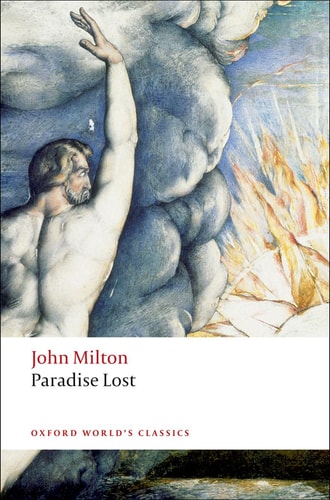
Paradise Lost
0
0
As an Amazon Associate and affiliate partner, Menrva Books earns from qualifying purchases. Learn more
Author Description
From almost the moment of its publication in 1667, Paradise Lost was considered a classic. It is difficult now to appreciate how audacious an undertaking the epic represents, and how astonishing its immediate and continued success was. Over the course of twelve books John Milton wrote an epic poem that would "justify the ways of God to men," a mission that required a complex drama, the source of which is both historical and deeply personal. While the struggle for ascendancy between God and Satan is played out across hell, heaven, and earth in the work, the consequences of the Fall are all too humanly tragic, with pride, ambition, and aspiration being the motivating forces. In this new edition derived from their acclaimed Oxford Authors text, Stephen Orgel and Jonathan Goldberg discuss the complexity of Milton's Paradise Lost in a new introduction. They contextualize Milton and his poem, discuss its structure and language, and provide a summary of critical responses to the poem since its initial publication. They also include on-page notes to explain the poem's language and allusions. This modernized edition of one of the most influential works in the English language will truly bring to light Milton's genius for today's reader.About the Series: For over 100 years Oxford World's Classics has made available the broadest spectrum of literature from around the globe. Each affordable volume reflects Oxford's commitment to scholarship, providing the most accurate text plus a wealth of other valuable features, including expert introductions by leading authorities, voluminous notes to clarify the text, up-to-date bibliographies for further study, and much more.
Menrva's Summary
THE PULSE
The central conflict arises from Satan's rebellion against God and his subsequent attempt to corrupt humanity in the Garden of Eden. The protagonist, if viewed through the lens of the epic's dramatic arc, is often identified as Satan, whose pride and ambition drive him to challenge divine authority. Opposing him is the cosmic order established by God, which seeks to maintain balance and justice across heaven, hell, and earth. The narrative is presented as a grand epic poem, utilizing elevated blank verse to explore the moral and theological implications of the Fall of Man.
INSIDE THE PAGES
- Twelve books of structured blank verse
- Exploration of theological themes including free will and divine justice
- Detailed characterization of Satan as a complex, tragic figure
- Vivid descriptions of the landscapes of Heaven, Hell, and Earth
- Use of classical epic conventions such as the invocation of the Muse
- Examination of the psychological motivations behind pride and ambition
- Integration of biblical narrative with classical mythology
- Sophisticated linguistic construction and rhetorical devices
THE COLLECTIVE ECHO
Discussion often centers on the moral ambiguity of Milton's portrayal of Satan, which has sparked centuries of debate regarding the author's true intent. Readers frequently highlight the density and musicality of the verse, noting that the poem requires careful attention to appreciate its structural complexity. Critics often examine how the work balances its grand theological scope with the intimate, human tragedy of Adam and Eve. The poem remains a central subject of academic inquiry, with scholars continuously analyzing its influence on the development of English literature and its enduring relevance to questions of human agency.
Page Count:
317
Publication Date:
2008-05-15
Publisher:
Oxford University Press
ISBN-10:
0199535744
ISBN-13:
9780199535743
Poetry
Philosophy
Epic Poetry
classic
Religious
Community Tags
Other Editions(5)
Similar Books
Reader Comments
Share Your Thoughts
No comments yet. Be the first to share your thoughts!