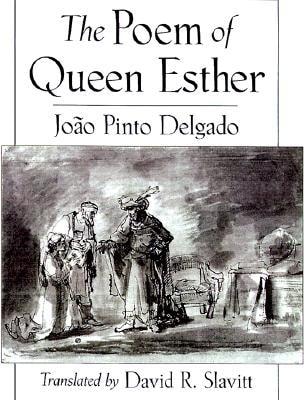
The Poem of Queen Esther
0
0
As an Amazon Associate and affiliate partner, Menrva Books earns from qualifying purchases. Learn more
Author Description
This is a translation of a Spanish poem by João Pinto Delgado (c. 1585-1653) that is based on the biblical book of Esther. His choice of subject here was not accidental; the murderous persecution of the biblical Jews by the Persian King Haman stands as an obvious analogue to their sufferings at the hands of the Inquisition. Today, it also resonates with the events of the Holocaust. At the same time, this virtually unknown work is an elegant piece of Renaissance writing that bears stylistic and thematic affinities to important poems of the English Renaissance, such as those of Spenser, Sidney, and Marlowe. Slavitt's skillful translation approximates the rhyme scheme of the original and wonderfully evokes the lavishness and sensuousness of Pinto Delgado's suave descriptions. Also included in this volume is a translation of Pinto Delgados shorter poem In Praise of the Lord.
Menrva's Summary
THE PULSE
The poem recounts the biblical narrative of Queen Esther, who must navigate the lethal political machinations of the Persian court to prevent the genocide of her people. Facing the existential threat posed by Haman, Esther utilizes her position as queen to intercede with King Ahasuerus, balancing personal risk against the survival of the Jewish population. The narrative framework utilizes the structure of a long-form Renaissance poem, employing elevated language and intricate rhyme schemes to mirror the gravity of the historical and theological stakes. The work functions as both a retelling of scripture and a coded commentary on the persecution of crypto-Jews during the Inquisition.
INSIDE THE PAGES
- Adaptation of the biblical Book of Esther into verse
- Use of complex rhyme schemes characteristic of the Renaissance period
- Allegorical parallels between Haman and the historical figures of the Inquisition
- Sensuous and lavish descriptive passages regarding court life
- Thematic exploration of faith, survival, and divine providence
- Stylistic alignment with the works of Spenser, Sidney, and Marlowe
- Inclusion of the supplementary poem In Praise of the Lord
- Focus on the tension between private identity and public duty
THE COLLECTIVE ECHO
Discussion often centers on the poem's dual nature as both a religious text and a political allegory for the suffering of the Jewish diaspora. Readers frequently highlight the elegance of the translation, noting how it successfully captures the ornate, sensuous style of the original Spanish Renaissance verse. Critics emphasize the historical significance of Pinto Delgado as a voice reflecting the trauma of the Inquisition through the lens of biblical tragedy. The work is often analyzed for its thematic resonance with later historical catastrophes, including the Holocaust, which adds a layer of enduring gravity to the text. Scholars appreciate the inclusion of the shorter poem, which provides a broader view of the author's devotional focus.
Page Count:
112
Publication Date:
1999-01-21
Publisher:
Oxford University Press
ISBN-10:
0195123743
ISBN-13:
9780195123746
Poetry
Historical
Religious
Renaissance
Community Tags
Similar Books