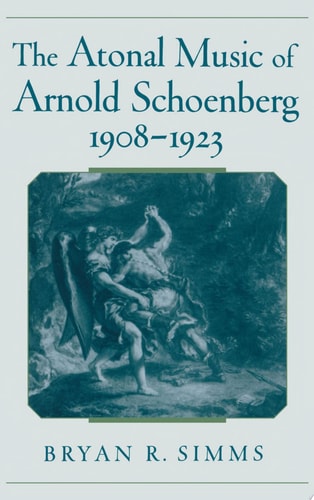
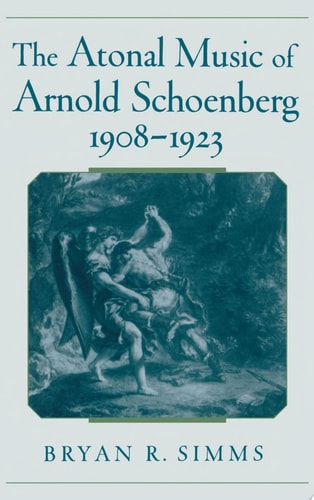
The Atonal Music of Arnold Schoenberg, 1908-1923
0
0
As an Amazon Associate and affiliate partner, Menrva Books earns from qualifying purchases. Learn more
Author Description
Between 1908 and 1923, Arnold Schoenberg began writing music that went against many of the accepted concepts and practices of this art. Largely following his intuition during these years, he composed some of the masterpieces of the modern repertoire--including Pierrot lunaire and Erwartung--works that have since provoked a large, though fragmented, body of critical and analytical writing. In this book, Bryan Simms combines a historical study with a close analytical reading of the music to give us a new and richer understanding of Schoenberg's seminal work during this period.
Menrva's Summary
THE THESIS
This book investigates the radical shift in Arnold Schoenberg’s compositional style between 1908 and 1923, a period defined by the abandonment of traditional tonality. Bryan R. Simms, a scholar of twentieth-century music, synthesizes historical context with rigorous technical analysis to explain how Schoenberg’s intuitive approach resulted in the creation of seminal modern works. The text provides a framework for understanding the transition from late Romanticism to the development of atonal structures and the eventual emergence of the twelve-tone method.
THE SCOPE MAP
What You Will Find
- Historical analysis of Schoenberg’s creative output between 1908 and 1923.
- Close technical readings of major compositions including Pierrot lunaire and Erwartung.
- Examination of the shift away from traditional harmonic practices.
- Synthesis of existing critical and analytical literature regarding the atonal period.
THE AUTHORITY PERSPECTIVE
Experts recognize this work as a significant contribution to the study of early twentieth-century music theory. Readers frequently note the technical density of the prose, which is intended for those with a background in musicology or advanced music theory.
Page Count:
286
Publication Date:
2000-11-16
Publisher:
Oxford University Press
ISBN-10:
0195128265
ISBN-13:
9780195128260
Music
History
Biography
Music theory
Music american
Community Tags
Other Editions(2)
Similar Books