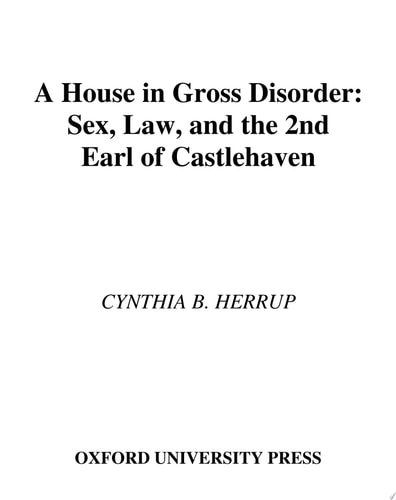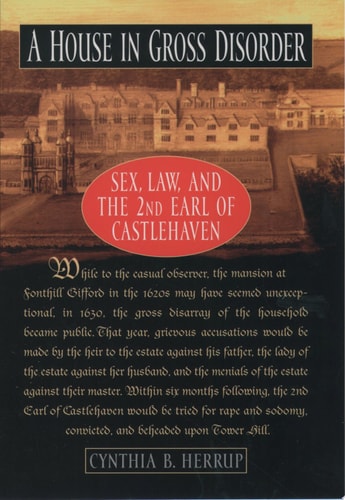
A House in Gross Disorder: Sex, Law, and the 2nd Earl of Castlehaven
0
0
As an Amazon Associate and affiliate partner, Menrva Books earns from qualifying purchases. Learn more
Author Description
Sex, privilege, corruption, and revenge--these are elements that we expect to find splashed across today's tabloid headlines. But in 17th century England, a sex scandal in which the 2nd Earl of Castlehaven was executed for crimes so horrible that "a Christian man ought scarce to name them" threatened the very foundations of aristocratic hierarchy.In A House in Gross Disorder, Cynthia Herrup presents a strikingly new interpretation both of the case itself and of the sexual and social anxieties it cast into such bold relief. Castlehaven was convicted of abetting the rape of his wife and of committing sodomy with his servants. More than that, he stood accused of inverting the natural order of his household by reveling in rather than restraining the intemperate passions of those he was expected to rule and protect. Herrup argues that because an orderly house was considered both an example and endorsement of aristocratic governance, the riotousness presided over by Castlehaven was the most damning evidence against him. Castlehaven himself argued that he was the victim of an impatient son, an unhappy wife, and courtiers greedy for his lands. Eschewing simple conclusions about guilt or innocence, Herrup focuses instead on the fascinating legal, social and political dynamics of the case and its subsequent retellings.In prose as riveting as the moral and legal dramas it depicts, A House in Gross Disorder reconsiders a scandal that still speaks to contemporary anxieties about sex, good governance, and the role of law in regulating both.
Menrva's Summary
THE THESIS
Does the 17th-century trial and execution of the 2nd Earl of Castlehaven reveal a fundamental crisis in the relationship between aristocratic governance and the regulation of private morality? Cynthia B. Herrup, a historian specializing in early modern English law and society, utilizes court records, contemporary pamphlets, and political correspondence to examine this high-profile scandal. She argues that the Earl’s conviction was not merely a reaction to his alleged sexual crimes, but a symbolic defense of the patriarchal household as the essential unit of political order. By analyzing the intersection of domestic authority and state power, Herrup demonstrates how the scandal functioned as a proxy for broader anxieties regarding noble privilege and the limits of legal intervention in private life.
THE SCOPE MAP
What You Will Find
- Detailed analysis of the 1631 trial of Mervyn Tuchet, 2nd Earl of Castlehaven.
- Examination of early modern English legal frameworks regarding sodomy and marital rape.
- Use of primary source documents including trial transcripts, personal letters, and political tracts.
- Exploration of the ideological connection between household management and state governance.
THE AUTHORITY PERSPECTIVE
Historians and legal scholars frequently cite this work for its nuanced approach to the intersection of domestic politics and state authority in the Stuart era. Experts highlight the text as a significant contribution to the study of how early modern legal systems navigated the tension between aristocratic autonomy and public morality.
Page Count:
240
Publication Date:
1999-09-23
Publisher:
Oxford University Press
ISBN-10:
0195125185
ISBN-13:
9780195125184
Biography
True Crime
History
Legal History
Social History
Rape
British History
Great Britain