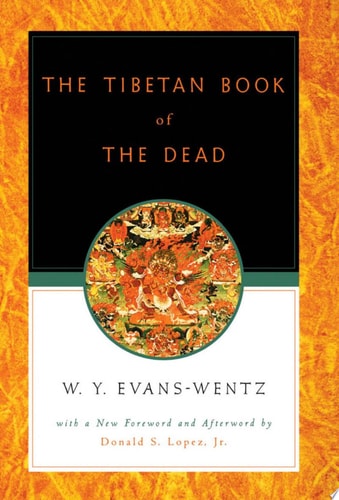
The Tibetan Book of the Dead: Or The After-Death Experiences on the Bardo Plane, according to Lāma Kazi Dawa-Samdup's English Rendering
0
0
As an Amazon Associate and affiliate partner, Menrva Books earns from qualifying purchases. Learn more
Author Description
The Tibetan Book of the Dead is one of the texts that, according to legend, Padma-Sambhava was compelled to hide during his visit to Tibet in the late 8th century. The guru hid his books in stones, lakes, and pillars because the Tibetans of that day and age were somehow unprepared for their teachings. Now, in the form of the ever-popular Tibetan Book of the Dead, these teachings are constantly being discovered and rediscovered by Western readers of many different backgrounds--a phenomenon which began in 1927 with Oxford's first edition of Dr. Evans-Wentz's landmark volume. While it is traditionally used as a mortuary text, to be read or recited in the presence of a dead or dying person, this book--which relates the whole experience of death and rebirth in three intermediate states of being--was originally understood as a guide not only for the dead but also for the living. As a contribution to the science of death and dying--not to mention the belief in life after death, or the belief in rebirth--The Tibetan Book of the Dead is unique among the sacred texts of the world, for its socio-cultural influence in this regard is without comparison.This fourth edition features a new foreword, afterword, and suggested further reading list by Donald S. Lopez, author of Prisoners of Shangri-La: Tibetan Buddhism and the West. Lopez traces the whole history of the late Evans-Wentz's three earlier editions of this book, fully considering the work of contributors to previous editions (C. G. Jung among them), the sections that were added by Evans-Wentz along the way, the questions surrounding the book's translation, and finally the volume's profound importance in engendering both popular and academic interest in the religion and culture of Tibet. Another key theme that Lopez addresses is the changing nature of this book's audience--from the prewar theosophists to the beat poets to the hippies to contemporary exponents of the hospice movement--and what these audiences have found.
Menrva's Summary
THE THESIS
This volume investigates the Bardo Thodol, a foundational Tibetan Buddhist text, to determine its utility as a guide for navigating the intermediate states between death and rebirth. W. Y. Evans-Wentz, an anthropologist and scholar of comparative religion, presents this translation to bridge Eastern esoteric traditions with Western philosophical inquiry. The work argues that the text functions as a practical manual for the dying, offering a roadmap for consciousness as it transitions through various stages of existence. By contextualizing the teachings within the broader framework of Tibetan cosmology, the author provides a structured approach to understanding the mechanics of reincarnation and spiritual liberation.
THE SCOPE MAP
What You Will Find
- A detailed translation of the Bardo Thodol, detailing the three intermediate states of the Bardo.
- Commentary on the historical and cultural origins of the text, including its attribution to Padma-Sambhava.
- Analysis of the psychological and spiritual implications of the death process as understood in Tibetan Buddhism.
- Scholarly examination of the text's reception in the West, including contributions from figures like C. G. Jung.
THE AUTHORITY PERSPECTIVE
Experts recognize this volume as a pivotal text that introduced Tibetan Buddhist concepts to the Western academic and spiritual landscape. Readers frequently note the density of the prose and the historical significance of the translation, which remains a standard reference for those studying the intersection of Eastern religion and Western psychology.
Page Count:
354
Publication Date:
2000-09-28
Publisher:
Oxford University Press
ISBN-10:
0195133110
ISBN-13:
9780195133110
Spirituality
Philosophy
Religion
Tibet China
Funeral Rites
Intermediate State
Buddhism
Death
Sacred books
Community Tags
Similar Books

Reader Comments
Share Your Thoughts
No comments yet. Be the first to share your thoughts!