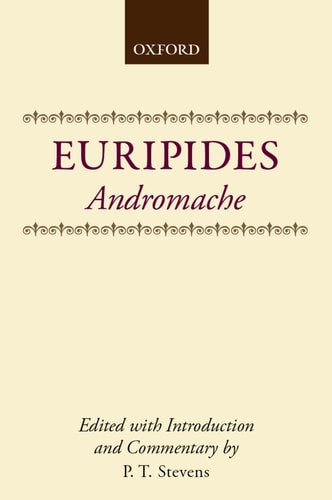
Andromache
0
0
As an Amazon Associate and affiliate partner, Menrva Books earns from qualifying purchases. Learn more
Author Description
This work has been selected by scholars as being culturally important, and is part of the knowledge base of civilization as we know it. This work was reproduced from the original artifact, and remains as true to the original work as possible. Therefore, you will see the original copyright references, library stamps (as most of these works have been housed in our most important libraries around the world), and other notations in the work.This work is in the public domain in the United States of America, and possibly other nations. Within the United States, you may freely copy and distribute this work, as no entity (individual or corporate) has a copyright on the body of the work.As a reproduction of a historical artifact, this work may contain missing or blurred pages, poor pictures, errant marks, etc. Scholars believe, and we concur, that this work is important enough to be preserved, reproduced, and made generally available to the public. We appreciate your support of the preservation process, and thank you for being an important part of keeping this knowledge alive and relevant.
Menrva's Summary
THE PULSE
The central conflict ignites when Andromache, the widow of Hector, faces imminent execution at the hands of Hermione, the jealous wife of Neoptolemus. Andromache seeks refuge at the sanctuary of Thetis to protect her son, Molossus, from the machinations of the Spartan princess Hermione and her father, Menelaus. The narrative framework follows the conventions of Greek tragedy, utilizing a chorus to provide moral commentary while characters engage in intense, high-stakes debates regarding honor, lineage, and divine justice. The physical constraints of the sanctuary provide a temporary, fragile safety, while the logical constraints of the world are dictated by the shifting alliances of the post-Trojan War era.
INSIDE THE PAGES
- Utilization of the traditional Greek chorus for thematic reflection
- Exploration of the consequences of the Trojan War on survivors
- Intense dialogue-driven confrontations between opposing female leads
- Examination of the tension between Spartan and Trojan cultural values
- Use of the sanctuary as a physical and symbolic space of protection
- Dramatic irony regarding the intervention of gods and heroes
- Focus on the themes of motherhood, slavery, and political vengeance
- Structural adherence to the conventions of Attic tragedy
THE COLLECTIVE ECHO
Discussion often centers on the play's complex portrayal of Andromache as a figure of resilience amidst the wreckage of war. Readers frequently highlight the sharp contrast between the domestic grievances of the characters and the broader geopolitical instability of the Greek world. Critics often note the play's departure from traditional heroic archetypes, focusing instead on the psychological toll of displacement and servitude. The pacing is recognized for its rapid escalation of tension, which effectively maintains focus on the precarious position of the protagonist throughout the performance.
Page Count:
264
Publication Date:
1984-09-20
Publisher:
Oxford University Press
ISBN-10:
0198721188
ISBN-13:
9780198721185
Drama
Tragedy
Plays
Dramatic works
Classical
Community Tags
Other Editions(8)



Similar Books

Reader Comments
Share Your Thoughts
No comments yet. Be the first to share your thoughts!