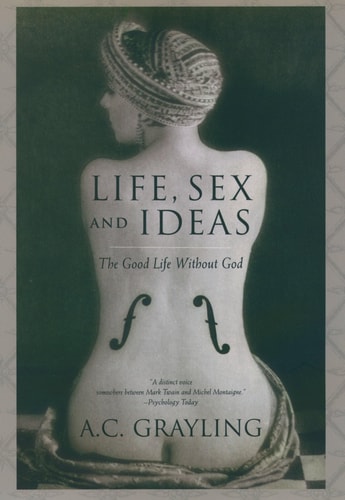
Life, Sex and Ideas: The Good Life without God
0
0
As an Amazon Associate and affiliate partner, Menrva Books earns from qualifying purchases. Learn more
Author Description
"A distinctive voice somewhere between Mark Twain and Michel Montaigne" is how Psychology Today described A.C. Grayling. In Life, Sex, and Ideas: The Good Life Without God, readers have the pleasure of hearing this distinctive voice address some of the most serious topics in philosophy--and in our daily lives--including reflections on guns, anger, conflict, war; monsters, madness, decay; liberty, justice, utopia; suicide, loss, and remembrance.A civilized society, says Grayling, is one which never ceases having a discussion with itself about what human life should best be. In this book, Grayling adds to this discussion a series of short informal essays about ethics, ideas, and culture. A recurring theme is religion, of which he writes "there is no greater social evil." He argues, for instance, that liberal education is better than religion for inculcating moral values. "Education in literature, history, and appreciation of the arts," he says, "opens the possibility for us to live more reflectively and knowledgeably, especially about the nature and variety of human experience. That in turn increases our capacity for understanding others better, so that we can treat them with respect and sympathy, however different their outlook on life." Thought provoking rather than definitive, these essays don't tell readers what to think, but only note what has been thought about how it is best to live.A person who does not think about life, the author reminds us, is like a stranger mapless in a foreign land. These brief and suggestive essays offer us the outlines of a map, with avenues of thought that are a pleasure to wander down.
Menrva's Summary
THE THESIS
This collection of essays investigates the possibility of living a meaningful, ethical life through the lens of secular humanism rather than religious doctrine. A.C. Grayling, a prominent philosopher and academic, utilizes his background in logic and history to construct a framework for modern living. He argues that liberal education, critical inquiry, and an appreciation for the arts provide a more robust foundation for moral development than traditional religious structures. By examining the nature of human experience, Grayling posits that a reflective life is essential for navigating the complexities of contemporary society.
THE SCOPE MAP
What You Will Find
- A series of short, informal essays covering diverse topics such as justice, liberty, war, and personal loss.
- A critical examination of the role of religion in modern social and moral discourse.
- Arguments for the superiority of liberal education in fostering empathy and understanding.
- Philosophical reflections on the nature of human experience and the necessity of self-examination.
THE AUTHORITY PERSPECTIVE
Critics and readers frequently note the accessibility of Grayling's prose, which balances philosophical rigor with a conversational tone. Experts highlight this work as a representative example of contemporary secular humanist thought that encourages independent critical thinking rather than providing prescriptive dogma.
Page Count:
256
Publication Date:
2003-04-03
Publisher:
Oxford University Press
ISBN-10:
0195162528
ISBN-13:
9780195162523
Religion
Philosophy
Essays
Humanism
Ethics
Social Commentary
Community Tags
Similar Books