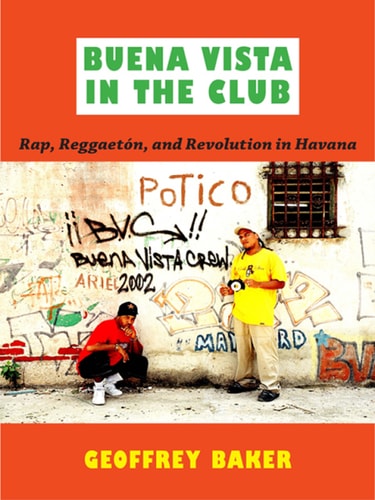
Buena Vista in the Club Rap, Reggaetón, and Revolution in Havana
0
0
As an Amazon Associate and affiliate partner, Menrva Books earns from qualifying purchases. Learn more
Author Description
In Buena Vista in the Club, Geoffrey Baker traces the trajectory of the Havana hip hop scene from the late 1980s to the present and analyzes its partial eclipse by reggaetón. While Cuban officials initially rejected rap as "the music of the enemy," leading figures in the hip hop scene soon convinced certain cultural institutions to accept and then promote rap as part of Cuba's national culture. Culminating in the creation of the state-run Cuban Rap Agency, this process of "nationalization" drew on the shared ideological roots of hip hop and the Cuban nation and the historical connections between Cubans and African Americans. At the same time, young Havana rappers used hip hop, the music of urban inequality par excellence, to critique the rapid changes occurring in Havana since the early 1990s, when the Soviet Union fell, its subsidy of Cuba ceased, and a tourism-based economy emerged. Baker considers the explosion of reggaetón in the early 2000s as a reflection of the "new materialism" that accompanied the influx of foreign consumer goods and cultural priorities into "sociocapitalist" Havana. Exploring the transnational dimensions of Cuba's urban music, he examines how foreigners supported and documented Havana's growing hip hop scene starting in the late 1990s and represented it in print and on film and CD. He argues that the discursive framing of Cuban rap played a crucial part in its success.
Menrva's Summary
THE THESIS
This book investigates the complex relationship between urban music, cultural identity, and socio-political change in Havana, Cuba. Geoffrey Baker, drawing on extensive research, analyzes the rise of the Havana hip hop scene from its initial rejection by authorities to its eventual embrace as a national cultural product. The book explores how young rappers used hip hop to critique the societal shifts following the Soviet Union's collapse and the emergence of a tourism-based economy. It also examines the subsequent rise of reggaetón as a reflection of a new materialism and the impact of international engagement on the scene.
THE SCOPE MAP
- The trajectory of Havana's hip hop scene from the late 1980s to the present.
- Analysis of the process of "nationalization" of rap music in Cuba.
- Examination of hip hop as a critique of socio-economic changes in Havana.
- Exploration of reggaetón's rise and its connection to "new materialism."
- Discussion of the transnational dimensions of Cuba's urban music scene.
- Analysis of how foreign documentation and representation shaped Cuban rap's success.
THE AUTHORITY PERSPECTIVE
The book is recognized for its in-depth exploration of the socio-political context surrounding urban music in Havana. Scholars likely appreciate its detailed tracing of hip hop's evolution and its critical engagement with Cuban national culture. The analysis of reggaetón's emergence as a response to economic shifts provides a nuanced perspective on contemporary Cuban society. The work is positioned as a significant contribution to the study of music, culture, and politics in post-Soviet Cuba.
Page Count:
410
Publication Date:
2011-04-14
Publisher:
Duke University Press
ISBN-10:
082239393X
ISBN-13:
9780822393931
History
Non-Fiction
Music
Cuba
Music History
Hip-hop
Urban Studies
Community Tags
Similar Books