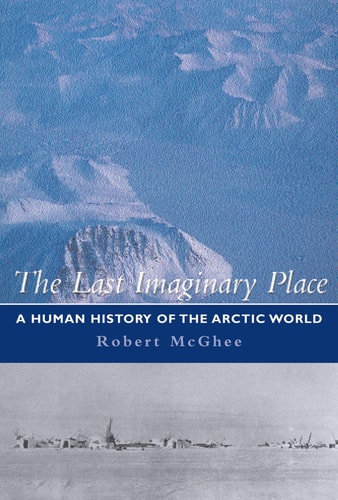
The Last Imaginary Place: A Human History of the Arctic World
0
0
As an Amazon Associate and affiliate partner, Menrva Books earns from qualifying purchases. Learn more
Author Description
Sea ice and the midnight sun, flaming aurora and endless winter night--the arctic of traveler's tales and romantic novels is the unattainable dream of a vast and desolate world--the last imaginary place on Earth.Now, in this fascinating volume, renowned archeologist Robert McGhee lifts the veil to reveal the true Arctic. Combining anthropology, history, and personal memoir, this book dispels romanticized notions of the Arctic as a world apart, exotic and isolated, revealing a land far more fascinating than we had imagined. McGhee paints a vivid portrait of the movement of Viking farmers across the North Atlantic islands, and of the long and arduous searches for sea-passages to Asia. We meet the fur-traders who pioneered European expansion across the northern forests of Canada and Siberia, the whalers and ivory-hunters who ravaged northern seas, and patriotic explorers racing to reach the North Pole. Most important, McGhee offers far more coverage of the native peoples of the Arctic, societies that other histories usually neglect. We discover how northerners have learned to exploit a rich "hunter's world" where game is, contrary to our expectations, far easier to find than in more temperate lands. McGhee takes us to a thousand-year-old Tuniit campsite perfectly preserved in the Arctic cold, follows the entrepreneurial Inuit as they cross the Arctic in search of metal, and reveals the dangers that native people face today from industrial pollution and global warming.Flavored by McGhee's personal reflections based on thirty years of work and travel in the region, here is a wide ranging, enlightening look at one of the most culturally rich and fascinating areas of the world.
Menrva's Summary
THE THESIS
This book investigates the historical reality of the Arctic, challenging the romanticized perception of the region as an isolated, desolate wasteland. Renowned archaeologist Robert McGhee utilizes his extensive professional background and personal field experience to synthesize anthropological data and historical records. He argues that the Arctic has long been a dynamic, interconnected space shaped by both indigenous societies and external European expansion, rather than a static frontier.
THE SCOPE MAP
What You Will Find
- Historical analysis of Viking migration and European exploration efforts.
- Anthropological insights into the survival strategies of indigenous Arctic populations.
- Examination of the environmental and industrial impacts on the modern Arctic.
- Integration of personal memoir with academic archaeological research.
THE AUTHORITY PERSPECTIVE
Experts and readers frequently commend this work for its ability to bridge the gap between rigorous archaeological research and accessible narrative history. The text is widely recognized for providing a necessary, human-centric perspective on a region often defined solely by its extreme climate.
Page Count:
320
Publication Date:
2005-06-01
Publisher:
Oxford University Press
ISBN-10:
0195183681
ISBN-13:
9780195183689
History
Geography
Exploration
Arctic
Anthropology
Arctic Regions
Community Tags
Similar Books