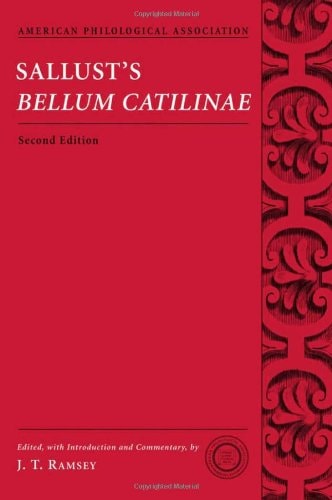
Sallust's Bellum Catilinae
0
0
As an Amazon Associate and affiliate partner, Menrva Books earns from qualifying purchases. Learn more
Author Description
In his Bellum Catilinae, C. Sallustius Crispus or Sallust (86-35/34 B.C.) recounts the dramatic events of 63 B.C., when a disgruntled and impoverished nobleman, L. Sergius Catilina, turned to armed revolution after two electoral defeats. Among his followers were a group of heavily indebted young aristocrats, the Roman poor, and a military force in the north of Italy. With his trademark archaizing style, Sallust skillfully captures the drama of the times, including an early morning attempt to assassinate the consul Cicero and two emotionally charged speeches, by Julius Caesar and Cato the Younger, in a senatorial debate over the fate of the arrested conspirators. Sallust wrote while the Roman Republic was being transformed into an empire during the turbulent first century B.C.The Bellum Catilinae is well-suited for second-year or advanced Latin study and provides a fitting introduction to the richness of Latin literature, while also pointing the way to a critical investigation of late-Republican government and historiography. Ramsey's introduction and commentary bring the text to life for Latin students. This new edition (updated from the 2007 printing) includes two maps and two city plans, an updated and now annotated bibliography, a list of divergences from the 1991 Oxford Classical Text of Sallust, and revisions in the introduction and commentary.
Menrva's Summary
THE THESIS
This text investigates the political instability and moral decline of the late Roman Republic through the lens of the Catilinarian conspiracy. The author, Sallust, provides a contemporary historical account of the failed coup led by L. Sergius Catilina in 63 B.C. By examining the motivations of the conspirators and the reactions of the Roman Senate, the work serves as a critical analysis of the systemic corruption and social unrest that preceded the collapse of the Republic.
THE SCOPE MAP
What You Will Find
- A detailed historical account of the 63 B.C. conspiracy led by L. Sergius Catilina.
- Analysis of the political climate during the transition from Roman Republic to Empire.
- Primary source speeches from key figures including Julius Caesar and Cato the Younger.
- Pedagogical tools including maps, city plans, and annotated bibliographies for Latin students.
THE AUTHORITY PERSPECTIVE
Experts and educators frequently cite this edition as a foundational resource for intermediate and advanced Latin students. Readers note the academic density of the commentary, which effectively bridges the gap between linguistic study and historical analysis of the late-Republican period.
Page Count:
272
Publication Date:
2007-01-01
Publisher:
Oxford University Press
ISBN-10:
0195320840
ISBN-13:
9780195320848
History
Rome
Political History
Latin
Ancient History
Community Tags
Similar Books