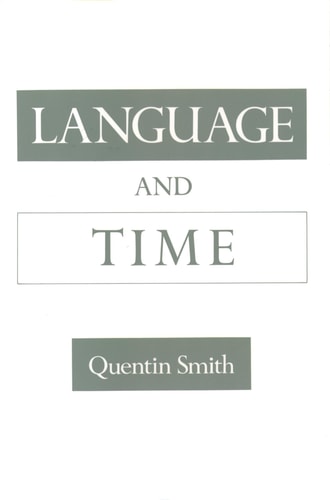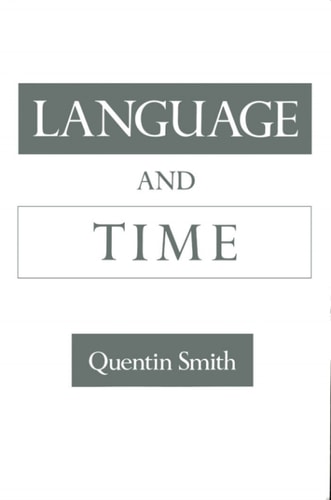
Language and Time
0
0
As an Amazon Associate and affiliate partner, Menrva Books earns from qualifying purchases. Learn more
Author Description
This book offers a defense of the tensed theory of time, a critique of the New Theory of Reference, and an argument that simultaneity is absolute. Although Smith rejects ordinary language philosophy, he shows how it is possible to argue from the nature of language to the nature of reality. Specifically, he argues that semantic properties of tensed sentences are best explained by the hypothesis that they ascribe to events temporal properties of futurity, presentness, or pastness and do not merely ascribe relations of earlier than or simultaneity. He criticizes the New Theory of Reference, which holds that "now" refers directly to a time and does not ascribe the property of presentness. Smith does not adopt the old or Fregean theory of reference but develops a third alternative, based on his detailed theory of de re and de dicto propositions and a theory of cognitive significance. He concludes the book with a lengthy critique of Einstein's theory of time. Smith offers a positive argument for absolute simultaneity based on his theory that all propositions exist in time. He shows how Einstein's relativist temporal concepts are reducible to a conjunction of absolutist temporal concepts and relativist nontemporal concepts of the observable behavior of light rays, rigid bodies, and the like.
Menrva's Summary
THE THESIS
This book investigates the ontological status of time by defending the tensed theory of time against contemporary semantic and physicalist challenges. Quentin Smith, a philosopher known for his work in metaphysics and the philosophy of time, utilizes a rigorous analytical framework to bridge the gap between linguistic semantics and the nature of reality. He argues that the semantic properties of tensed sentences necessitate an objective, tensed view of time, ultimately challenging the prevailing New Theory of Reference and Einsteinian relativity.
THE SCOPE MAP
What You Will Find
- A defense of the tensed theory of time against tenseless alternatives.
- A critical analysis of the New Theory of Reference regarding indexical terms like 'now'.
- A proposed third alternative to Fregean and direct reference theories based on de re and de dicto propositions.
- A critique of Einstein's theory of time and an argument for the existence of absolute simultaneity.
THE AUTHORITY PERSPECTIVE
Experts recognize this work as a significant contribution to the debate between A-theory and B-theory models of time. Readers frequently note the high level of technical density and the demanding nature of the author's engagement with both linguistic philosophy and theoretical physics.
Page Count:
272
Publication Date:
2002-01-01
Publisher:
Oxford University Press
ISBN-10:
0195348184
ISBN-13:
9780195348187
Philosophy
Historical linguistics
Time
Physics
Metaphysics