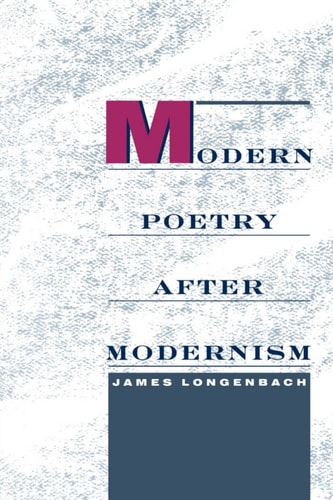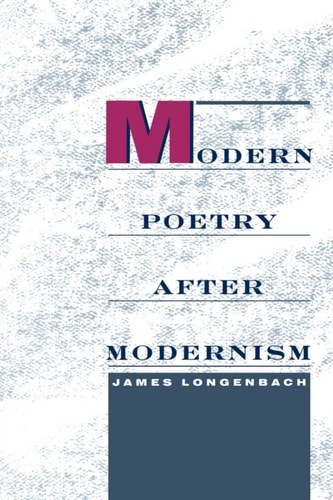
Modern Poetry after Modernism
0
0
As an Amazon Associate and affiliate partner, Menrva Books earns from qualifying purchases. Learn more
Author Description
In this book, James Longenbach develops a fresh approach to major American poetry after modernism. Rethinking the influential "breakthrough" narrative, the oft-told story of postmodern poets throwing off their modernist shackles in the 1950s, Longenbach offers a more nuanced perspective. Reading a diverse range of poets--John Ashbery, Elizabeth Bishop, Amy Clampitt, Jorie Graham, Richard Howard, Randall Jarrell, Robert Lowell, Robert Pinsky, and Richard Wilbur--Longenbach reveals that American poets since mid- century have not so much disowned their modernist past as extended elements of modernism that other readers have suppressed or neglected to see. In the process, Longenbach allows readers to experience the wide variety of poetries written in our time-- without asking us to choose between them.
Menrva's Summary
THE THESIS
This book investigates the evolution of American poetry in the post-modernist era by challenging the conventional narrative that poets of the 1950s rejected their modernist predecessors. James Longenbach, a scholar of American literature, utilizes close readings of mid-century and contemporary poets to argue that these writers actually extended and transformed modernist techniques rather than discarding them. His framework emphasizes continuity over rupture, providing a more complex understanding of how poetic traditions persist and evolve across generations.
THE SCOPE MAP
What You Will Find
- Analysis of major American poets including John Ashbery, Elizabeth Bishop, and Robert Lowell.
- A critical re-evaluation of the 'breakthrough' narrative in 20th-century literary history.
- Close textual readings of works by Amy Clampitt, Jorie Graham, Richard Howard, Randall Jarrell, Robert Pinsky, and Richard Wilbur.
- A methodology that prioritizes the coexistence of diverse poetic styles over binary choices.
THE AUTHORITY PERSPECTIVE
Scholars and critics frequently cite this work as a vital intervention in the study of 20th-century American verse. The text is noted for its accessible yet rigorous approach to complex literary history, making it a standard reference for students and academics alike.
Page Count:
228
Publication Date:
1997-01-01
Publisher:
Oxford University Press
ISBN-10:
0195356357
ISBN-13:
9780195356359
History
Poetry
Literary Criticism
Postmodernism
English
English & College Success
American
Modernism