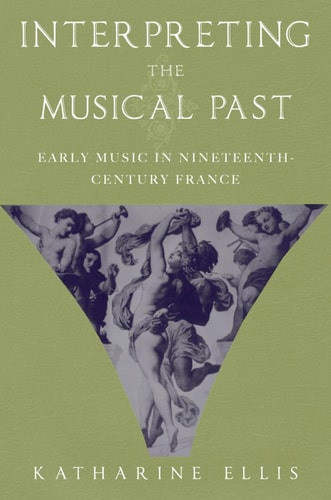
Interpreting the Musical Past: Early Music in Nineteenth Century France
0
0
As an Amazon Associate and affiliate partner, Menrva Books earns from qualifying purchases. Learn more
Author Description
In an era of heightened patriotic fervor following France's defeat in the Franco-Prussian War, Parisians packed concert halls to hear performances of Handel's oratorios and Bach's organ works. At the same time, both royalists and republicans called for the re-evaluation of the once detested musique française of the ancien régime. Musicologist Katharine Ellis examines these unlikely aspects of cultural life in the new Republic as part of a broader study of the early music revival in nineteenth-century France. This revival gives us a vivid sense of how music's cultural meanings were contested, distilled into dominant visions, and then often revised. Peppering the century are famous fakes, pastiches and other creative negotiations between past and present. Descriptions of these phenomena by contemporary witnesses reveal how dissent could run along social, religious and political lines, and why certain genres became idealized while others were disparaged.After providing an overview of trends and contexts throughout the century, Ellis examines specific repertoires that evoked unusually spirited advocacy and debate. She explores the attempts to revive French Baroque stage music in the 1870s; arguments on the appropriateness of Palestrina's liturgical music; the reception of Bach and Handel, and their relation to French choral activity; and, finally, musical "Frenchness." Four case-study chapters focus on key debates and repertories stretching from Adam de la Halle to Rameau, via Josquin, Janequin, Palestrina, Bach and Handel.Interpreting the Musical Past discusses what is at stake in the construction of a musical heritage, and how ideology informs musical value judgements. In its focus on the nature of musical experience and the meaning of music in society, the book explores amateur and professional music-making; working-class, aristocratic and bourgeois cultural life; national pride; religious politics; and ritual, both liturgical and secular.Based on extensive primary research.
Menrva's Summary
THE THESIS
This book investigates how the nineteenth-century French revival of early music functioned as a site for negotiating national identity, political ideology, and cultural value. Katharine Ellis, a prominent musicologist, utilizes extensive primary source research to analyze how the performance and reception of historical repertoires—ranging from the Baroque to the Renaissance—were shaped by the shifting social and political landscape of post-war France. She argues that the construction of a musical heritage was never a neutral act, but rather a deliberate process of ideological framing that reflected the tensions between royalist, republican, and nationalist factions.
THE SCOPE MAP
What You Will Find
- Analysis of the nineteenth-century French early music revival and its socio-political drivers.
- Case studies on the reception of composers including Handel, Bach, Palestrina, and Rameau.
- Examination of the role of amateur and professional music-making in shaping national identity.
- Methodology for interpreting historical musical debates through contemporary witness accounts and critical discourse.
THE AUTHORITY PERSPECTIVE
Scholars and musicologists frequently cite this work as a foundational text for understanding the intersection of musicology and cultural history in nineteenth-century France. Readers often note the academic density of the prose, which provides a rigorous and nuanced look at how musical value is constructed within a society.
Page Count:
320
Publication Date:
2008-08-20
Publisher:
Oxford University Press
ISBN-10:
0195365852
ISBN-13:
9780195365856
Cultural History
National Characteristics French
Music History
Musicology
Nationalism In Music
French History
Community Tags
Other Editions(2)

Similar Books





Reader Comments
Share Your Thoughts
No comments yet. Be the first to share your thoughts!