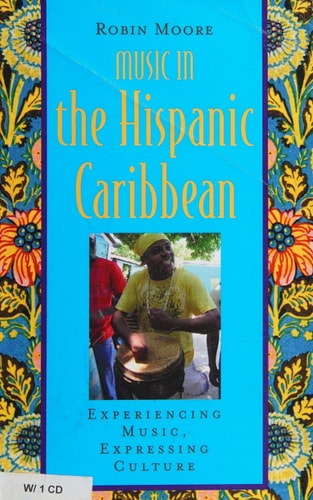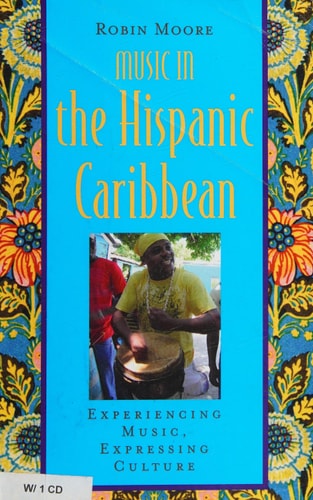
Music in the Hispanic Caribbean: Experiencing Music, Expressing Culture
0
0
As an Amazon Associate and affiliate partner, Menrva Books earns from qualifying purchases. Learn more
Author Description
Music in the Hispanic Caribbean explores the musical and cultural traditions of the Spanish-speaking countries of the Greater Antilles (Cuba, the Dominican Republic, and Puerto Rico), a relatively small group of islands with a surprisingly wide-reaching influence on music. The birth place of enduring styles such as salsa and meringue and up-and-coming genres like reggaeton, the music of the region has yet be examined in a standalone volume. Moore uses three themes-the cultural legacy of the slave trade, the creolization of Caribbean musical styles, and the impact of colonialism and race relations-to survey the region and draw parallels and contrasts between its various traditions Designed to be used as one of several short and inexpensive case study volumes in the Global Music Series, this volume is appropriate for introductory undergraduate courses in world music or ethnomusicology and for upper-level courses on Caribbean and Latin American music and/or culture. Based on the author's own extensive fieldwork, the text features interviews with performers, eyewitness accounts of performances, and vivid illustrations. The book also features listening activities that enable students to engage critically and actively with the text. The included 70-minute CD contains examples of music discussed in the text, and supplementary material for instructors will be available on the companion web site.
Menrva's Summary
THE THESIS
This volume investigates how the musical traditions of Cuba, the Dominican Republic, and Puerto Rico reflect the complex historical and cultural identities of the Hispanic Caribbean. Author Robin James Moore, an expert in ethnomusicology, utilizes his extensive fieldwork to analyze how the slave trade, creolization, and colonial power dynamics have shaped the region's diverse sonic landscape. By examining the evolution of genres from traditional styles to modern reggaeton, the text provides a structured framework for understanding the interplay between social history and musical expression.
THE SCOPE MAP
What You Will Find
- Analysis of musical traditions in Cuba, the Dominican Republic, and Puerto Rico.
- Exploration of the cultural legacy of the slave trade and colonial race relations.
- Integration of primary source interviews with performers and eyewitness accounts of live performances.
- Pedagogical tools including listening activities and a 70-minute companion audio CD.
THE AUTHORITY PERSPECTIVE
Experts and educators recognize this text as a foundational resource for undergraduate courses in world music and ethnomusicology. Readers frequently note that the prose is accessible yet academically rigorous, making it an effective tool for both introductory and upper-level cultural studies curricula.
Page Count:
256
Publication Date:
2009-12-11
Publisher:
Oxford University Press
ISBN-10:
0195375068
ISBN-13:
9780195375060
Music
Music
Caribbean Studies
Criticism history
Music Caribbean