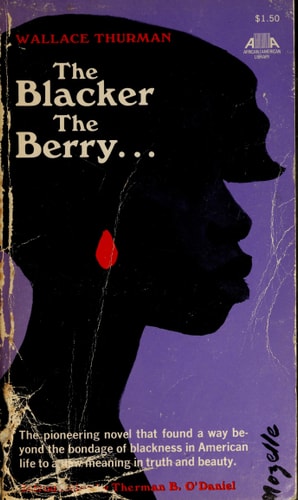
The Blacker the Berry
0
0
As an Amazon Associate and affiliate partner, Menrva Books earns from qualifying purchases. Learn more
Author Description
A source of controversy upon its 1929 publication, this novel was the first to openly address color prejudice among black Americans. The author, an active member of the Harlem Renaissance, offers insightful reflections of the era's mood and spirit in an enduringly relevant examination of racial, sexual, and cultural identity.
Menrva's Summary
THE PULSE
The protagonist, Emma Lou Morgan, struggles to navigate a society that marginalizes her due to the darkness of her skin tone. Emma Lou moves from Idaho to Harlem, seeking a community where she can belong and find acceptance. She encounters internal and external barriers as she attempts to reconcile her personal identity with the colorism prevalent within the black community of the 1920s. The narrative follows her attempts to assimilate into various social circles, highlighting the logical constraints of a world defined by rigid racial and aesthetic hierarchies. The story is presented through a third-person perspective that focuses on the psychological state of the protagonist.
INSIDE THE PAGES
- Exploration of colorism within the African American community
- Detailed depiction of 1920s Harlem social life
- Examination of internalized racism and self-perception
- Critique of social stratification based on physical appearance
- Portrayal of the intellectual and artistic climate of the Harlem Renaissance
- Focus on the isolation of the outsider
- Realistic dialogue reflecting the era's vernacular
- Analysis of the intersection between racial and cultural identity
THE COLLECTIVE ECHO
Discussion often centers on the bold decision of the author to confront internal prejudices that were frequently ignored by other writers of the Harlem Renaissance. Readers frequently highlight the stark, unflinching tone used to depict the protagonist's persistent alienation and her inability to find solace in either white or black social spheres. Critics often note that the pacing mirrors the protagonist's own sense of restlessness and her cyclical attempts to find validation. The work remains a subject of academic interest for its candid portrayal of the psychological toll of colorism and its historical significance as a piece of early twentieth-century social realism.
Page Count:
256
Publication Date:
1970-05-01
Publisher:
Scribner Paper Fiction
ISBN-10:
0020547501
ISBN-13:
9780020547501
Historical Fiction
Classic Literature
African American
Social Commentary