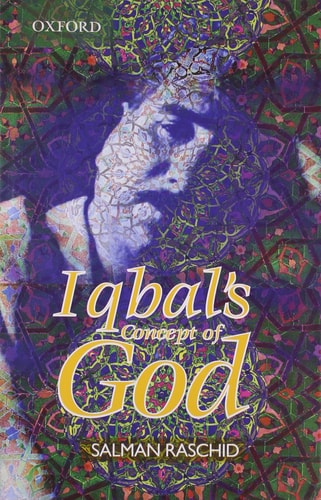
Iqbal’s Concept of God
Author Description
This book is based upon a detailed and critical examination of Iqbal's concept of God as expounded in Chapter II of The Reconstruction of Religious Thought in Islam. His concept of God is a finite (panentheistic) one and is based largely upon Iqbal's reading of Western philosophy (Hegel, Whitehead and Bergson). Iqbal draws extravagant metaphysical conclusions from his reading of these Western thinkers; he then relates these philosophical theses to the Quran and the tradition of Muslim thought.Iqbal's finite (panentheistic) deity is very close to the (pantheistic) Sufi concept of God. However, Iqbal manages to ignore the whole tradition of tafsir (exegesis) and kalam (theology). Additionally, his finite deity cannot be reconciled with the Quranic doctrine of God.A similar conclusion is reached following an examination of the Sufi teaching as expounded by Isa Nuruddin (Fritjhof Schuon) and Abubakr Sirajuddin (Martin Lings).This conclusion leads to contemporary discussions of mysticism.Finally, an attempt is made to go beyond Iqbal and to specify the precise logical peculiarity of 'the problem of God'.
Menrva's Summary
THE THESIS
This book investigates the logical consistency and theological validity of Muhammad Iqbal’s concept of a finite, panentheistic deity as presented in his seminal work, The Reconstruction of Religious Thought in Islam. M.S. Raschid, drawing upon a rigorous analytical framework, evaluates how Iqbal synthesizes Western philosophical influences—specifically those of Hegel, Whitehead, and Bergson—with Quranic doctrine and traditional Islamic thought. The author argues that Iqbal’s metaphysical conclusions often diverge from established theological traditions, ultimately questioning the compatibility of a finite God with the foundational tenets of the Quran.
THE SCOPE MAP
What You Will Find
- A critical analysis of Chapter II of The Reconstruction of Religious Thought in Islam.
- A comparative study of Iqbal’s panentheism versus traditional Sufi pantheistic concepts.
- An examination of the works of Isa Nuruddin and Abubakr Sirajuddin regarding Sufi mysticism.
- A logical inquiry into the inherent peculiarities and contradictions within the philosophical problem of God.
THE AUTHORITY PERSPECTIVE
Scholars and students of Islamic philosophy view this text as a challenging critique that highlights the tension between modern philosophical synthesis and classical theological exegesis. Readers frequently note the academic density of the prose, which requires a foundational understanding of both Western metaphysics and Islamic kalam to fully engage with the author's arguments.
Page Count:
350
Publication Date:
2014-01-01
Publisher:
Oxford University Press
ISBN-10:
0195476948
ISBN-13:
9780195476941
Religion
Philosophy
Theology
God Islam
Metaphysics
Islam
Community Tags
Similar Books